

The Historical and Cultural Essence of Onam
Onam, Kerala’s most celebrated harvest festival, carries a cultural depth that transcends beyond its vibrant festivities. Celebrated during the Malayalam month of Chingam (August–September), Onam marks the legendary return of King Mahabali, a ruler remembered for his golden reign of equality, prosperity, and happiness. The festival unites people of all faiths and communities, emphasizing Kerala’s inclusiveness and the spirit of harmony. More than just a festival, Onam is a living reflection of Kerala’s history, folklore, and traditions that have been preserved for centuries.
The cultural significance of Onam can be seen in the elaborate Pookalams (floral rangolis), traditional art forms like Kathakali and Pulikali, Vallamkali (snake boat races), and of course, the grand Onam Sadya—a feast of over 20 dishes served on a banana leaf. But what truly stands out is how the festival emphasizes traditional attire, reinforcing a deep connection to Kerala’s roots. Men and women alike adorn themselves in elegant ethnic wear, particularly the Kerala Kasavu saree, mundu, and cotton kurtas, symbolizing purity and cultural pride. Over the years, Onam attire has not only remained integral to Kerala’s cultural identity but has also gained admiration across India and globally, representing simplicity blended with grandeur.
In modern society, Onam continues to hold immense relevance. It offers people a moment to reconnect with their heritage amidst a fast-paced life. Traditional clothing during Onam plays a significant role in this reconnection—it is not just fabric, but a thread that ties generations together. Wearing these timeless outfits is both a celebration of tradition and a way to honor the values of unity, respect, and cultural pride that King Mahabali’s era represents. With Onam 2025 around the corner, let us look at the must-have traditional outfits that make the festival even more special.
Traditional Must-Have Outfits for Women
1. Kerala Kasavu Saree with Hand Embroidery (Off-white)
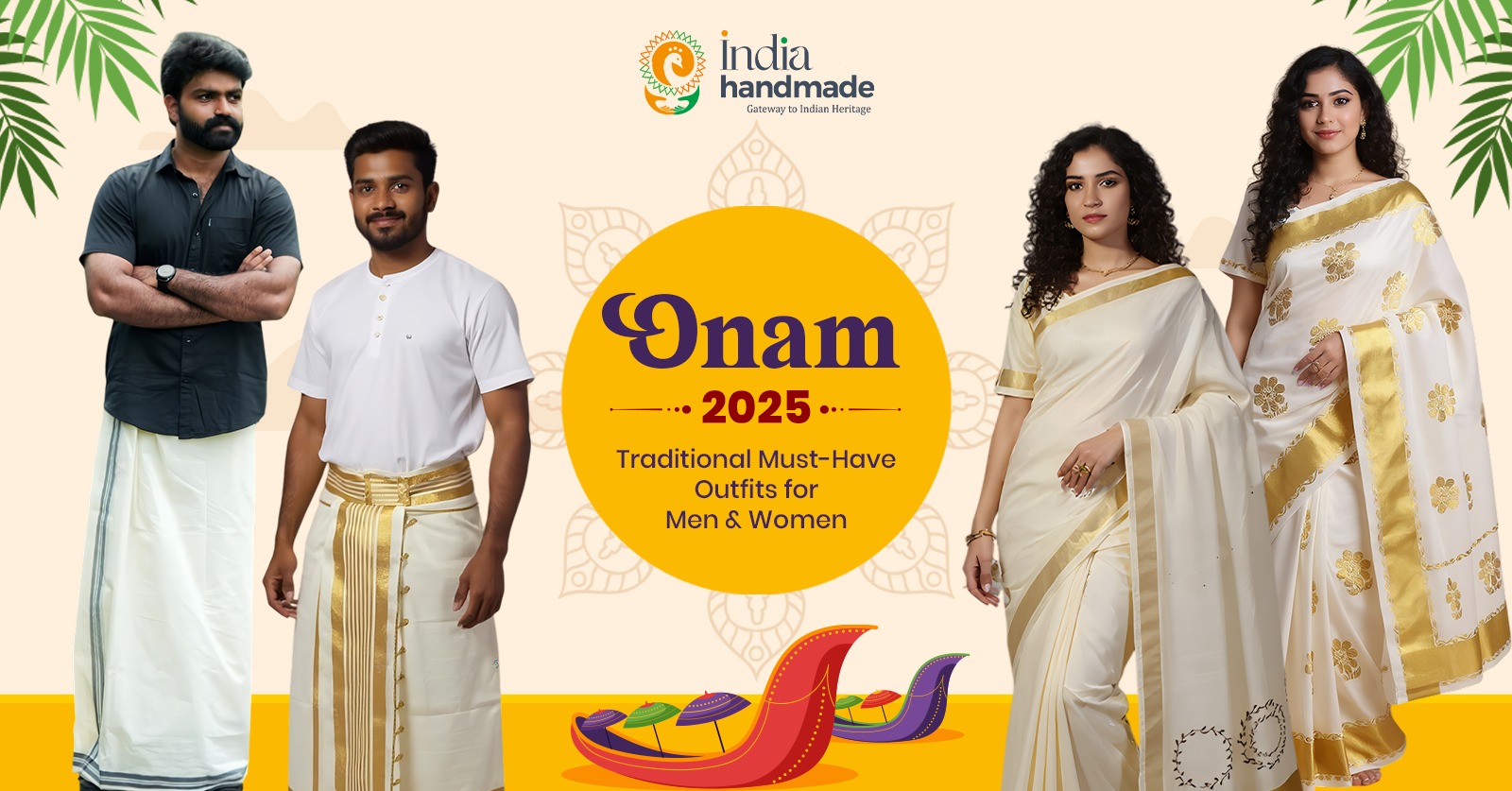
Nothing speaks of Onam celebrations more gracefully than a Kerala Kasavu saree. The off-white base with golden zari border has been the hallmark of Onam attire for centuries. This particular saree, adorned with delicate hand embroidery, blends tradition with artistry, making it perfect for festive gatherings. The elegance of hand embroidery adds a modern touch without taking away from its cultural essence. Pair it with traditional gold jewelry, a gajra, and simple sandals to complete the quintessential Onam look.
The word Kasavu refers to the gold thread used in weaving the border. Earlier, pure gold was spun into threads, making these sarees treasured heirlooms. Today, the intricate hand embroidery continues that legacy, making it a modern heirloom piece.
2. Kerala Kasavu Saree with Hand Embroidered Stars (Off-white)
For women who prefer subtle yet eye-catching designs, the Kasavu saree with embroidered stars is a perfect pick. The tiny star motifs across the fabric add charm and uniqueness while maintaining the traditional off-white and gold combination. It’s ideal for both young women celebrating Onam for the first time and elder women who love timeless elegance. This cotton Kasavu saree symbolizes festivity, dignity, and Kerala’s unmatched handloom craftsmanship.
During Onam, women traditionally pair of Kasavu sarees with jasmine flowers in their hair and gold jewelry, especially mullamottu mala (a necklace inspired by jasmine buds). Wearing embroidered versions like this is a modern interpretation while staying loyal to tradition.
3. Other Alternatives for Women
While the Kerala Kasavu saree remains the heart of Onam traditions, many women today also love experimenting with other sarees that capture the festive spirit in fresh ways. Handloom cotton sarees in pastel hues, soft silk sarees with zari borders, Kuthampully cotton handloom saree with golden zari border, and lightweight linen sarees with subtle embroidery are becoming popular choices for Onam ethnic wear dresses. These alternatives not only provide comfort during Kerala’s warm weather but also allow women to showcase individuality while staying rooted in tradition. Pairing such sarees with statement jewelry or modern blouses can give a contemporary twist, making them perfect for those who want to celebrate Onam in style yet stand apart from the classic Kasavu look.
Traditional Must-Have Outfits for Men
1. Peach Cotton Kurta for Men
Onam festivities call for light, comfortable, yet stylish clothing, and this Peach Cotton Kurta is an excellent choice. Its pastel tone complements the earthy charm of Onam while offering comfort during Kerala’s humid weather. Perfect for pairing with a mundu or pajama, this kurta blends modern hues with traditional cuts, making it versatile for cultural gatherings and family functions.
In Kerala’s cultural history, men often paired brightly hued kurtas with plain mundus to signify festivity. Shades like peach were once seen as auspicious, symbolizing joy and warmth—making them perfect for Onam 2025 outfits.
2. Sage Green Cotton Kurta for Men
For men who prefer a refreshing shade, the Sage Green Cotton Kurta offers a perfect blend of modern fashion with cultural aesthetics. Soft on the skin and breathable, this kurta looks elegant when paired with a white mundu or dhoti. The pastel shade resonates with nature, symbolizing serenity and prosperity—perfect values to celebrate Onam.
Traditionally, men wore white or cream during festivals. However, pastel tones like sage green are becoming popular in recent years, symbolizing eco-consciousness and harmony with nature. It’s a modern way to express tradition with individuality.
3. White Kerala Mundu Set for Men
A Kerala mundu is one of the most iconic Onam outfits. The pure white fabric with subtle golden borders has been worn for generations, symbolizing simplicity, dignity, and respect for tradition. This mundu set can be paired with a plain kurta or shirt, making it versatile and authentic at the same time. It remains one of the most popular Onam 2025 outfits for men.
The mundu is often folded differently depending on occasion. For casual comfort, it is folded up, but for temple visits or Sadya feasts, it is worn long, showing respect. Wearing a mundu during Onam is like wearing Kerala’s identity itself.
4. Pure Cotton Khadi Lungi | White
The white cotton khadi lungi is another timeless option for men during Onam. Known for its softness and breathable nature, this outfit is ideal for a relaxed celebration at home or temple visits. Its lightweight fabric ensures comfort while keeping the traditional spirit alive. The khadi fabric also highlights India’s handloom heritage, making it both sustainable and cultural.
Khadi fabric has deep national significance—being handspun and linked to India’s independence movement. Wearing a khadi lungi for Onam is therefore both a cultural and patriotic nod to India’s heritage.
5. Handloom White Kurta for Men | XXL
For those who prefer a simple yet graceful look, the Handloom White Kurta is a must-have. Its handwoven texture speaks of authenticity, and when paired with a mundu or dhoti, it reflects the traditional attire worn during Onam. The breathable cotton makes it suitable for Kerala’s warm climate while maintaining a sophisticated festive charm.
Handloom kurtas often carry minor imperfections in weave, which are celebrated as marks of authenticity. Wearing one during Onam not only uplifts tradition but also supports India’s handloom sector.
6. Pure Cotton Men’s Dhoti with Green Border
Dhotis hold a sacred place in Kerala’s cultural attire. The cotton dhoti with a green border adds a subtle splash of color to the classic white garment. Worn during religious rituals, family gatherings, or Sadya feasts, this dhoti brings together comfort and authenticity. It can be paired with pastel kurtas for a contemporary look.
The colored border of a dhoti often signifies regional identity. Green-bordered dhotis are considered especially auspicious for festivals and religious ceremonies in Kerala.
Traditional Footwear for Men
1. Kolhapuri Chappals for Men (Tan Colour)
No traditional outfit is complete without the right footwear. The tan Kolhapuri chappals are a timeless classic, known for their durability and comfort. Handcrafted by artisans, they pair beautifully with mundus, kurtas, and dhotis, completing the ethnic Onam ensemble.
Kolhapuri chappals date back to the 13th century and were originally made for royalty in Maharashtra. Each pair is entirely handmade, often taking days to craft—making them a symbol of slow fashion and tradition.
2. Kolhapuri Chappals for Men (Black Colour)
For men who prefer a bold and versatile footwear option, the black Kolhapuri chappals are a great choice. They can be worn with both pastel and white traditional outfits, ensuring versatility while adding a stylish edge to the attire.
Unlike mass-produced footwear, genuine Kolhapuris are stitched without nails, using natural processes. Owning a pair means owning a piece of India’s artisanal history.
Styling Tips for Onam 2025
- Women can pair Kasavu sarees with gold jewelry such as temple necklaces, jhumkas, and bangles for a traditional look. Floral hair adornments like jasmine enhance the festive spirit.
- Men can combine cotton kurtas with mundus or dhotis for a balanced ethnic look. Adding a wristwatch or simple chain can enhance the style without overshadowing tradition.
- Footwear like Kolhapuri chappals are best suited with both men’s and women’s ethnic wear, ensuring comfort for long hours of celebrations.
- For a family photoshoot, pastel kurtas and Kasavu sarees together create a perfect blend of harmony and elegance.
Onam is a celebration of culture, heritage, and togetherness. The traditional outfits worn during this time are not only clothing but symbols of Kerala’s values and history. From the regal Kerala Kasavu sarees for women to the timeless mundus, dhotis, and kurtas for men, each outfit holds a special place in Onam celebrations. Adding handcrafted footwear like Kolhapuri chappals completes the festive look, ensuring style, comfort, and authenticity.
As we step into Onam 2025, let us celebrate this festival with outfits that keep our traditions alive while adapting to modern tastes. These carefully chosen ensembles reflect the elegance of Kerala’s heritage and the craftsmanship of India’s artisans. Wearing them is not just about dressing up—it is about carrying forward a cultural legacy that unites families, communities, and generations.
![8 Must-Have Summer Dresses for Your 2026 Capsule Wardrobe [Expert Picks]](https://img.indiahandmade.com/magefan_blog/IMG-20260518-WA0007.jpg)