

Monthly Archives: April 2026
-
April 21, 2026
India has always had gifted hands. From the looms of Varanasi to the Chikankari frames of Lucknow, from the blue pottery wheels of Jaipur to the cane workshops of Assam, this country holds craft traditions that go back centuries. What was needed was a platform that treated these traditions with the seriousness they deserve. That is exactly what Indiahandmade set out to do, and on 23rd April, the platform initiated by the Ministry of Textiles, Government of India, proudly completes three years of doing just that. Three years of real artisans, real craft and real connections between makers and buyers.
Where It All Began: The Vision Behind Indiahandmade
Indiahandmade was developed on a simple conviction: Indian handmade products are world-class, and the people making them deserve
-
April 13, 2026
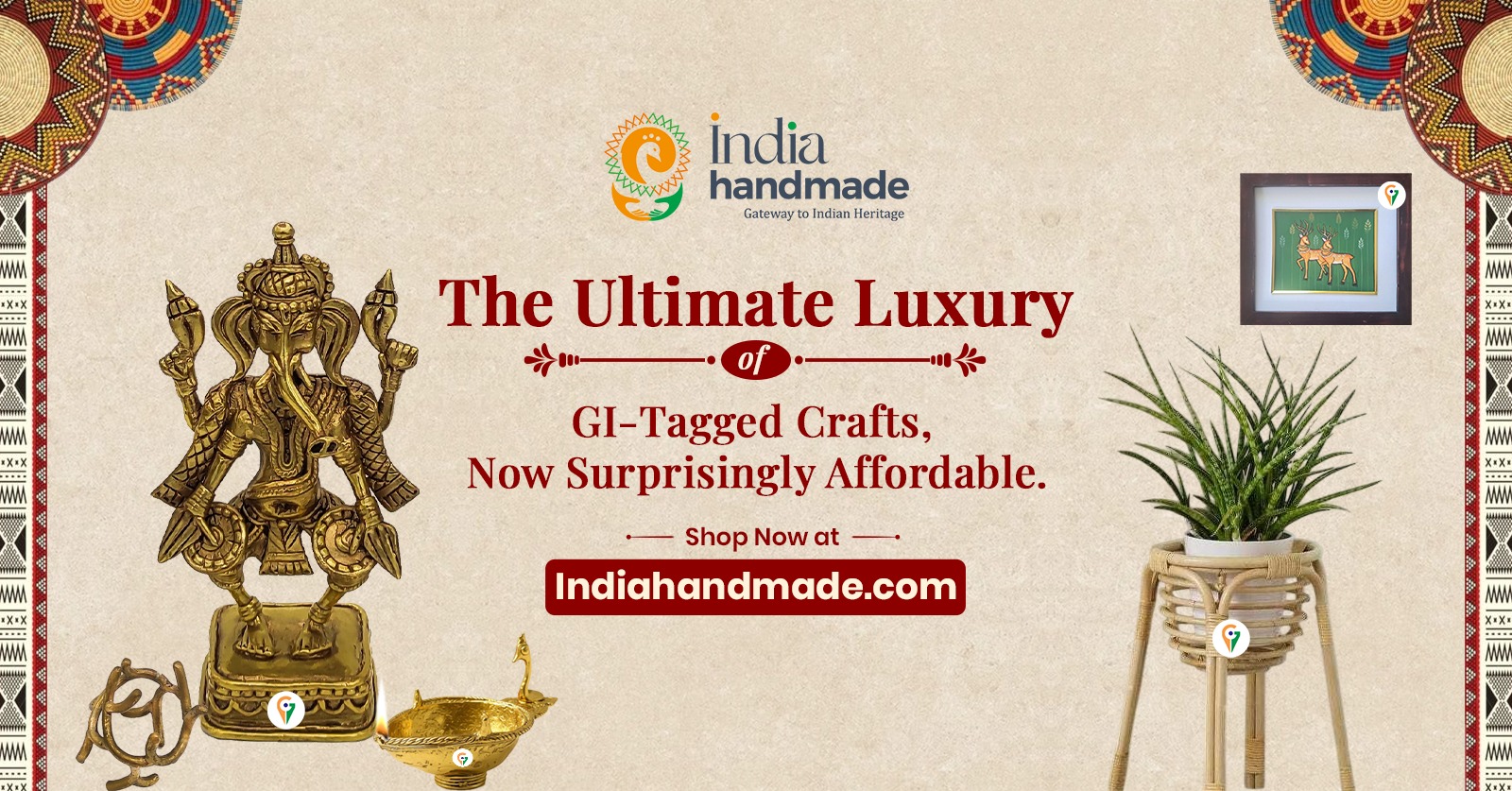
There was a time when handcrafted pieces from across India were spoken of in hushed admiration. These were pieces you saw in exhibitions or at someone’s ancestral home, carefully preserved and rarely used. They carried weight, not just in cost but in meaning. Today, the same crafts, rooted in regions and traditions, are entering modern homes with ease. And surprisingly, they are no longer out of reach.
The turning point has been the growing recognition of GI-tagged crafts. What once felt exclusive now feels possible, without losing its sense of value.
What Makes GI-Tagged Crafts So Special?
A GI tag, or geographical indication, does more than certify origin. It ties a craft to its soil, its weather and its people. A Bhujodi shawl carries the rhythm of Kutch. A Banarasi
-
April 07, 2026
Homes feel different when they carry something crafted by hand. Handmade bamboo and cane furniture brings a quiet charm that makes any room feel welcoming. Every curve, weave and grain holds a sense of calm that suits Indian homes beautifully. Here is a room-wise guide that helps you use bamboo furniture and bamboo and cane furniture in a natural, balanced way.
A Cosy Living Room with Gentle Textures
The living room sets the mood for the rest of the house. Handmade bamboo and cane furniture bring a soft warmth to this space. A bamboo sofa set with a woven cane back gives a relaxed
-
April 07, 2026
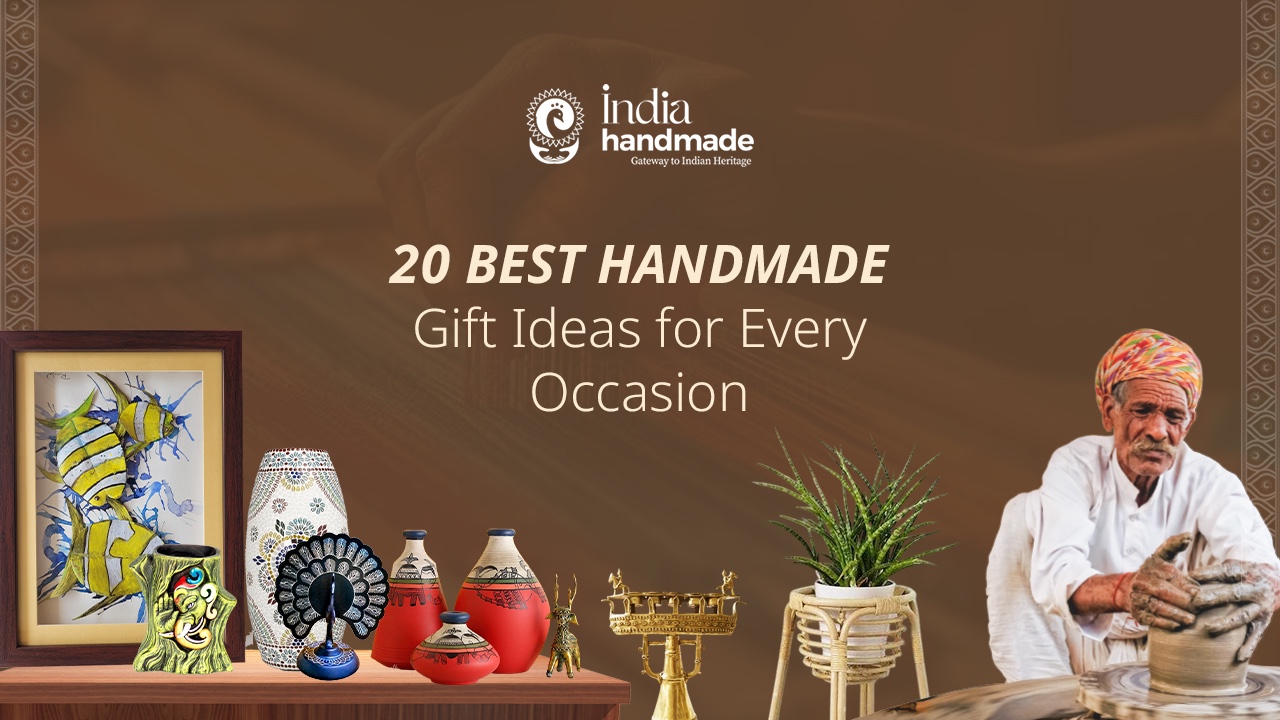
Handmade gifts have a timeless charm that never really fades. Long before online shopping and factory-made products became common, people relied on skilled artisans to create everyday objects, decorations, and meaningful gifts. In many cultures, handcrafted items were not just useful objects—they represented tradition, creativity, and the personal touch of the maker. Every carved piece of wood, molded clay figure, or engraved metal item carried hours of effort and artistic expression. Because of this, handmade gifts were often treasured and preserved for generations.
These creations also played an important role in cultural traditions and celebrations. From weddings and religious ceremonies to festivals and family gatherings, handcrafted items were exchanged as symbols of love, blessings,
-
April 01, 2026
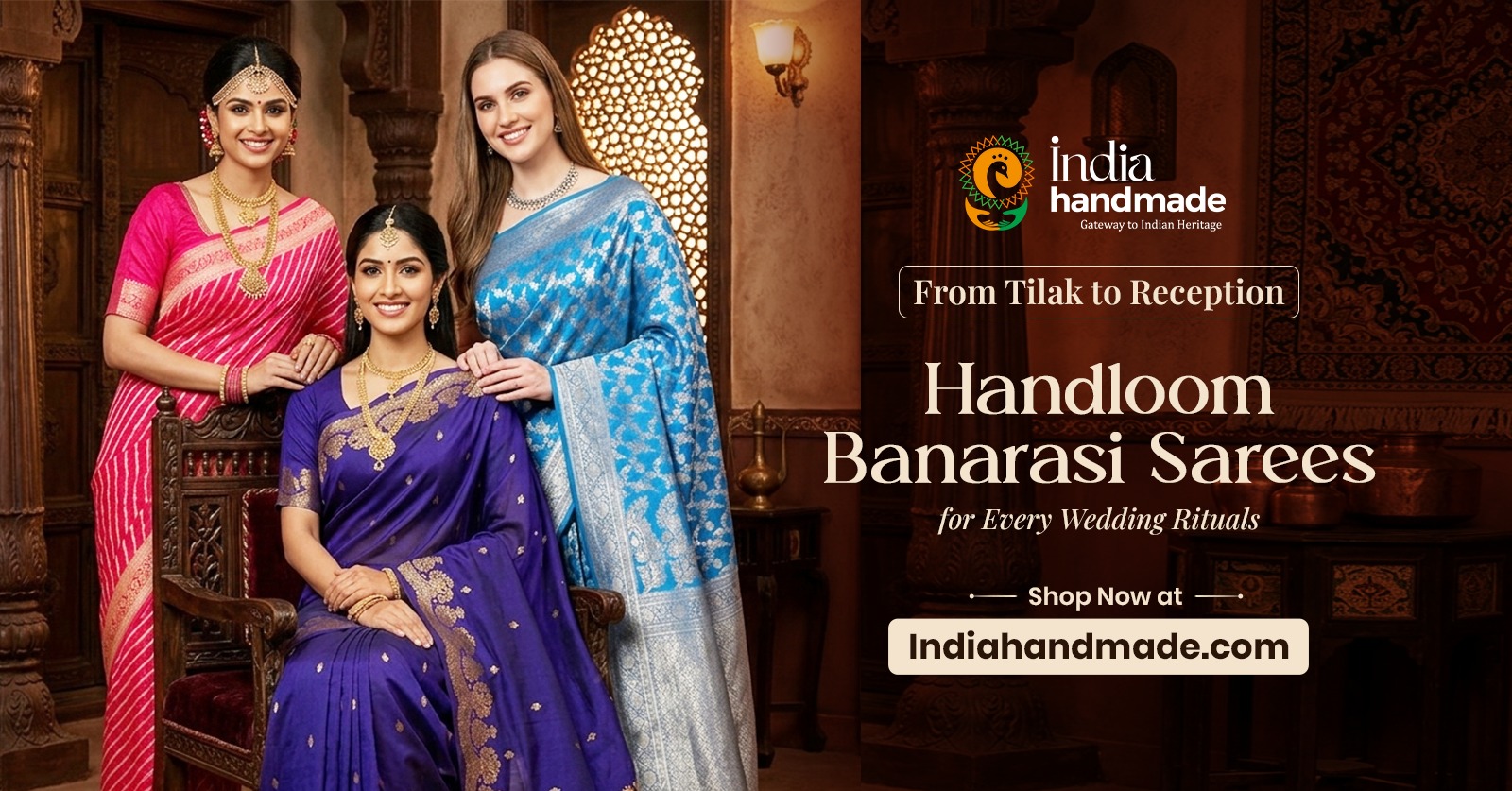
Cultural Roots and Relevance of Ethnic Wear in India
India’s relationship with textiles and traditional attire dates back thousands of years. Historical references from the Indus Valley Civilization show evidence of cotton weaving and hand embroidery, signifying an early inclination toward handmade ethnic wear. Over the centuries, regional styles like Phulkari, Chikankari, Bandhani, and Kalamkari have shaped how we define Indian fashion, each echoing the identity and craftsmanship of its place of origin. Whether it was the soft muslins of Bengal favored by royalty or the elaborate zardozi worn during Mughal court ceremonies, Indian ethnic wear outfits have always been more than just clothing—they're a canvas of our living traditions.
The evolution of traditional attire