Historical Significance and Cultural Heritage
Ganesh Chaturthi, one of India’s most cherished festivals, is steeped in history, spirituality, and cultural unity. Rooted in ancient traditions, the celebration honors Lord Ganesha — the harbinger of wisdom, prosperity, and the remover of obstacles. Historical accounts trace the organized public celebration of Ganesh Chaturthi to the Maratha ruler Chhatrapati Shivaji Maharaj, who encouraged large-scale worship as a way to promote cultural pride. Later, in the late 19th century, freedom fighter Bal Gangadhar Tilak revived it as a community festival to unite people against colonial rule, transforming private household worship into grand public gatherings. The festival became not just a religious occasion, but also a rallying point for social and cultural expression.
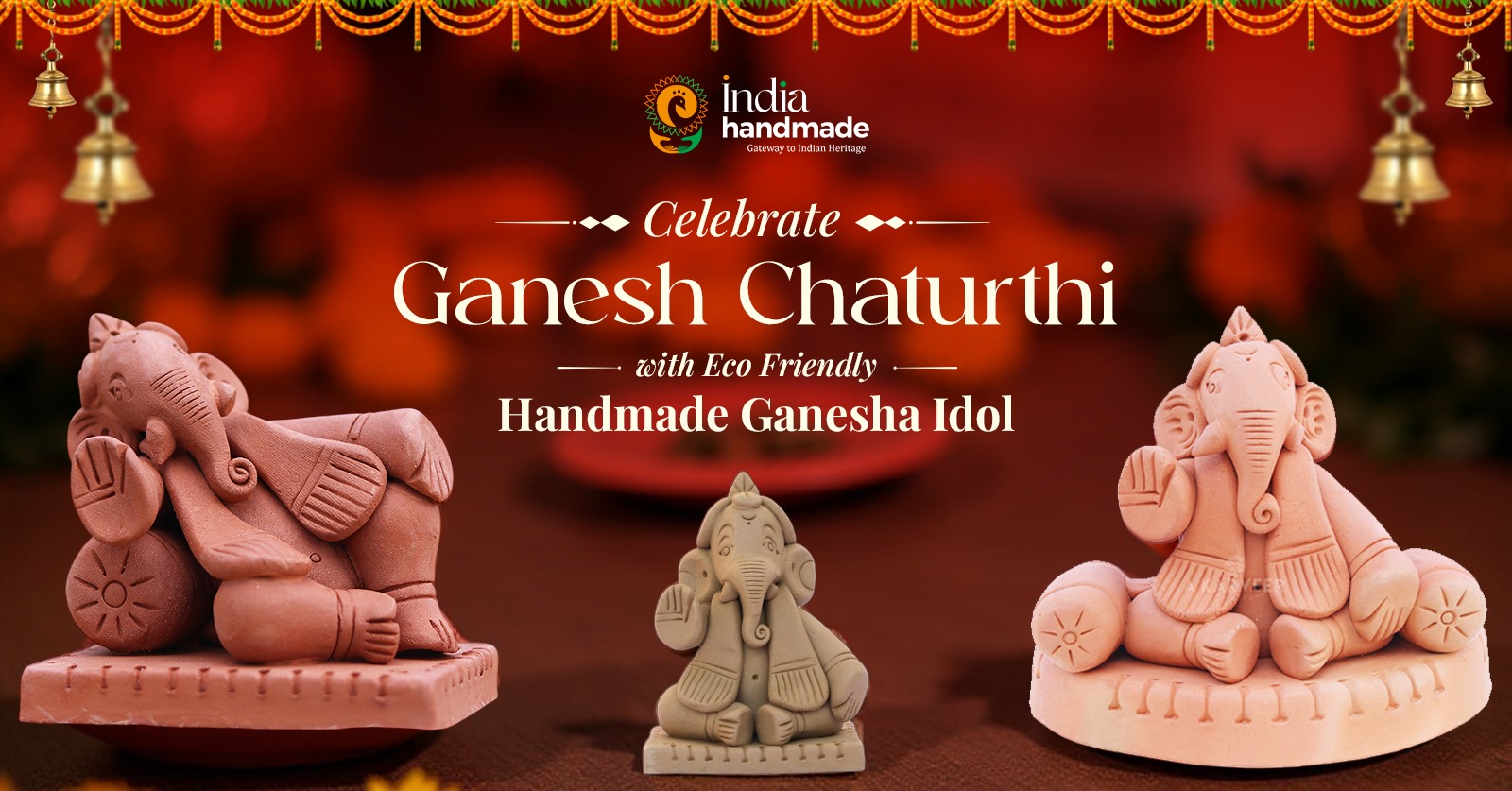
Handmade clay Ganesha idols have always been at the heart of this tradition, symbolizing purity, earth connection, and respect for nature. Crafted with devotion by skilled artisans, these idols embody centuries-old techniques passed down through generations. In earlier times, natural clay from riverbeds was molded by hand, painted with organic dyes, and immersed in water after the festivities, returning to nature without harm. This cyclical process reflected India’s deep-rooted philosophy of balance between celebration and sustainability. In modern society, Ganesh Chaturthi continues to be a festival that fosters community bonds, sustains artisan livelihoods, and reinforces cultural heritage. By embracing handmade clay idols, communities not only preserve an ancient craft but also uphold an eco-conscious tradition that aligns with our responsibility toward the environment.
The Shift Towards Eco-Friendly Celebrations
Over the years, mass production of Plaster of Paris (PoP) idols, coated with synthetic paints, has led to severe environmental damage during Ganesh visarjan (immersion). PoP takes months, sometimes years, to dissolve, releasing harmful chemicals into water bodies and disturbing aquatic ecosystems. The growing awareness of these ecological consequences has sparked a shift back to handmade clay idols. Eco-friendly Ganeshas are made from natural clay, often sourced locally, and decorated with organic colors, ensuring that they dissolve harmlessly into water and leave no toxic residue. This transition is not just about environmental responsibility but also about reviving artisan crafts that have been overshadowed by mass production.
Why Handmade Ganesha Idols Are Special
Each handmade Ganesha idol made of clay is a testament to craftsmanship, cultural continuity, and personal devotion. Unlike machine-made products, every clay Ganesha carries the unique touch of the artisan’s hand — from intricate facial expressions to detailed ornaments. The process often begins weeks before the festival, involving careful kneading of clay, shaping, sun-drying, and painting with natural pigments derived from turmeric, red soil, plant extracts, and charcoal. The result is a one-of-a-kind idol that not only radiates divinity but also carries a piece of India’s artistic legacy.
For many households, bringing home a clay Ganesha is a ritual steeped in symbolism. Clay, being a natural element, represents humility and impermanence, reminding devotees that life is a cycle of creation and dissolution. When immersed, the idol merges with water, nourishing the earth and completing the spiritual and ecological circle.
The Artisan’s Journey
Behind every handmade clay Ganesha idol is an artisan’s story of skill, patience, and resilience. Many of these craftsmen belong to families that have been shaping idols for generations. They often work in small workshops, using locally sourced clay, natural brushes made from coconut fiber, and organic colors. However, the rise of cheap PoP idols has threatened their livelihood. By choosing handmade clay idols, buyers directly support these artisans, enabling them to sustain their craft and pass it on to the next generation.
Artisans often start preparing for Ganesh Chaturthi months in advance. They make molds for basic structures, but the final detailing — the eyes, ornaments, and posture — is always done by hand. This ensures that no two idols are exactly alike, adding to their charm and value. Many artisans also experiment with innovative eco-friendly materials like red mud, cow dung, or seeds embedded in clay that sprout into plants after immersion, making the celebration even more sustainable.
Environmental Benefits of Clay Ganeshas
The most significant benefit of using handmade clay idols lies in their environmental compatibility. Since clay dissolves naturally in water, it prevents pollution and maintains water quality. Unlike PoP idols, which release heavy metals like mercury and lead from synthetic paints, clay idols use non-toxic colors that are safe for aquatic life. In addition, sourcing clay locally reduces the carbon footprint associated with transportation.
Eco-friendly Ganeshas also encourage responsible immersion practices. Many communities have started setting up artificial tanks for visarjan, where clay idols are immersed, and the water is later used for gardening or agriculture. This minimizes water wastage and prevents contamination of rivers and lakes.
How to Identify a Genuine Clay Ganesha Idol
With the growing demand for eco-friendly idols, some manufacturers falsely label PoP idols as clay-based. To ensure authenticity, buyers can look for these signs:
- Weight: Clay idols are heavier than PoP idols of the same size.
- Texture: Natural clay has a rough, earthy texture compared to the smoothness of PoP.
- Color: Handmade idols often have matte, earthy colors rather than bright synthetic shades.
- Labeling & Certification: Some artisan groups and NGOs provide certification for eco-friendly idols.
Blending Tradition with Modern Aesthetics
While traditional clay Ganeshas have a rustic charm, artisans today also create contemporary designs that appeal to younger generations. Minimalist idols, themed Ganeshas inspired by social messages, and custom-sized idols for small homes are gaining popularity. Organic decorations like jute garlands, banana leaf backdrops, and hand-painted motifs further enhance their visual appeal without harming the environment.
Community Initiatives and Awareness Campaigns
Many cities across India now promote eco-friendly Ganesh Chaturthi through awareness drives, workshops, and community idol-making sessions. Schools, NGOs, and resident welfare associations encourage people to make their own clay idols, deepening their connection to the festival. Government bodies in Maharashtra, Karnataka, and Andhra Pradesh also provide subsidies and designated stalls for clay idol sellers.
Such initiatives not only protect the environment but also bring communities together in the true spirit of Ganesh Chaturthi — unity, devotion, and collective responsibility.
Tips for Celebrating an Eco-Friendly Ganesh Chaturthi
Choose a Clay Idol from a Local Artisan – Support the local economy and reduce transportation emissions.
- Use Organic Decorations – Flowers, banana leaves, and fabric torans instead of plastic décor.
- Opt for Natural Lighting – Oil lamps and candles over electric serial lights.
- Eco-Friendly Offerings – Offer fruits and homemade sweets instead of packaged items.
- Responsible Immersion – Use artificial ponds or garden pits for visarjan to prevent water pollution.
Preserving Tradition for Future Generations
Celebrating Ganesh Chaturthi with a handmade clay idol is more than an environmental choice — it’s a cultural responsibility. It keeps alive a centuries-old craft, sustains rural livelihoods, and aligns the festival with India’s traditional philosophy of living in harmony with nature. As urban lifestyles evolve, holding on to these authentic practices ensures that the essence of our festivals remains untouched for generations to come.
In embracing handmade clay Ganeshas, we are not just worshipping a deity but honoring the earth that nurtures us, the artisans who preserve our heritage, and the community bonds that festivals like Ganesh Chaturthi strengthen.