

There was a time when handcrafted pieces from across India were spoken of in hushed admiration. These were pieces you saw in exhibitions or at someone’s ancestral home, carefully preserved and rarely used. They carried weight, not just in cost but in meaning. Today, the same crafts, rooted in regions and traditions, are entering modern homes with ease. And surprisingly, they are no longer out of reach.
The turning point has been the growing recognition of GI-tagged crafts. What once felt exclusive now feels possible, without losing its sense of value.
What Makes GI-Tagged Crafts So Special?
A GI tag, or geographical indication, does more than certify origin. It ties a craft to its soil, its weather and its people. A Bhujodi shawl carries the rhythm of Kutch. A Banarasi weave holds years of practice in each thread. These are not factory outputs. They are outcomes of time, patience and inherited skill.
For a buyer, this tag brings a sense of trust. You know where it comes from. You know it has not been mass-produced somewhere far removed from its roots. There is comfort in that clarity.
Why Did Luxury Once Feel Distant?
Handmade crafts have always required time. A single piece can take days or even weeks to complete. The artisan works without shortcuts, often using methods passed down through generations. Naturally, this made such products expensive.
There was also a gap between the maker and the buyer. Middlemen, exhibitions and limited access added to the cost. By the time a piece reached a customer, its price reflected more than just craftsmanship.
This is why many people admired these crafts but rarely bought them. They were appreciated from afar.
What Has Changed Now?
Today, access has improved. Platforms that work closely with artisan communities have shortened the journey from the loom or workshop to the customer’s home. The layers in between have reduced.
This has brought prices to a more reasonable level without taking away from the quality. It has also opened doors for artisans to reach a wider audience. Instead of depending on seasonal sales or exhibitions, they now have a steady way to showcase their work.
At the same time, buyers have become more aware. There is a growing interest in knowing where things come from. People are asking questions, reading labels and choosing carefully. That shift in mindset has made a difference.
The Appeal of Owning Something Real
There is a certain feeling that comes with owning a handcrafted piece. It does not feel identical to something picked off a shelf in bulk. There are slight variations, tiny irregularities and a sense of warmth that machine-made items rarely carry.
A handwoven cushion cover, for example, might not have perfect symmetry. But that is where its charm lies. It feels alive in a way that polished uniformity often does not.
Over time, such pieces settle into a home. They age gently, often becoming more beautiful with use. They also carry a story you can share about where it came from and who might have made it.
Everyday Spaces, Thoughtfully Styled
Another reason for this growing interest is how easily these crafts fit into modern spaces. You do not need a grand setting to use them. A single throw on a sofa, a set of hand-painted coasters or a woven basket can change the mood of a room.
People are mixing these elements with contemporary furniture and neutral tones. The result feels balanced. There is character without clutter and warmth without excess.
This approach also allows for small, meaningful purchases rather than large, expensive ones. Over time, these additions come together to create a space that feels personal.
Supporting Craft Without Saying Much
Buying GI-tagged products also carries a quiet sense of responsibility. It supports artisans who continue to practise their craft despite changing times. It helps keep traditional methods alive, not as museum pieces but as part of daily life.
There is no need for grand gestures here. Even a small purchase contributes to a larger cycle. It keeps skills relevant and ensures that future generations see value in continuing them.
A New Way to Think About Luxury
Luxury today feels less about excess and more about intention. It is about choosing something with care, something that lasts and something that holds meaning.
GI-tagged crafts fit into this idea naturally. They are not loud or showy. Their appeal lies in their honesty. You can see the effort, the detail and the time that went into making them. And now, with better access and fairer pricing, this kind of luxury feels possible for many more people.
Bringing It Home
If you have ever paused to admire a handcrafted piece but hesitated to buy it, this might be the right moment to revisit that thought. Start small. Choose something that fits your space and your taste.
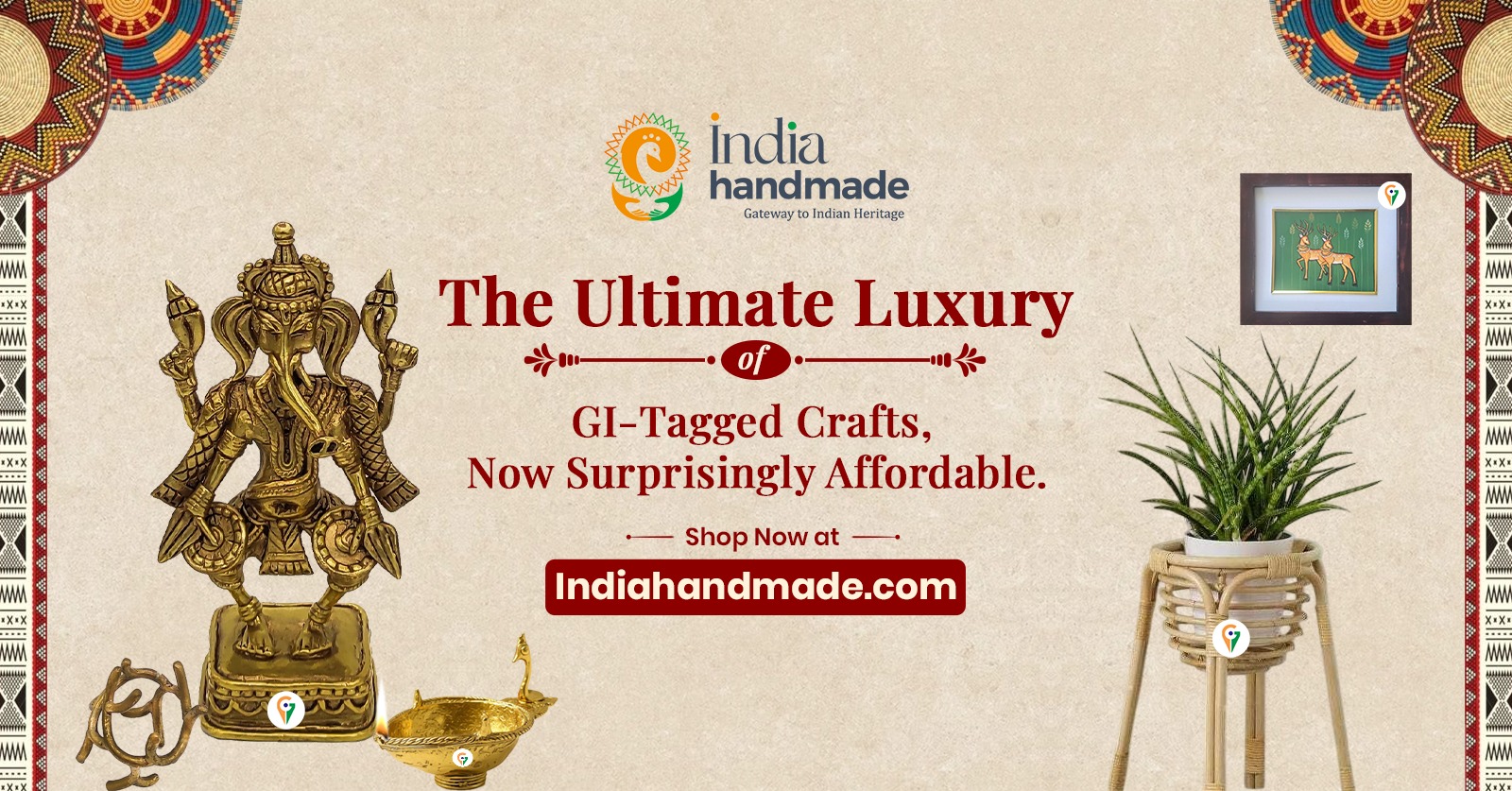
Explore collections directly by the artisans at Indiahandmade, where crafts rooted in tradition are presented with care and authenticity. It is a simple way to bring home something meaningful, without stretching beyond your comfort zone.
Luxury does not always need to feel distant. Sometimes, it sits quietly in the details you choose to live with every day.