

Indiahandmade Publisher
-
October 05, 2026
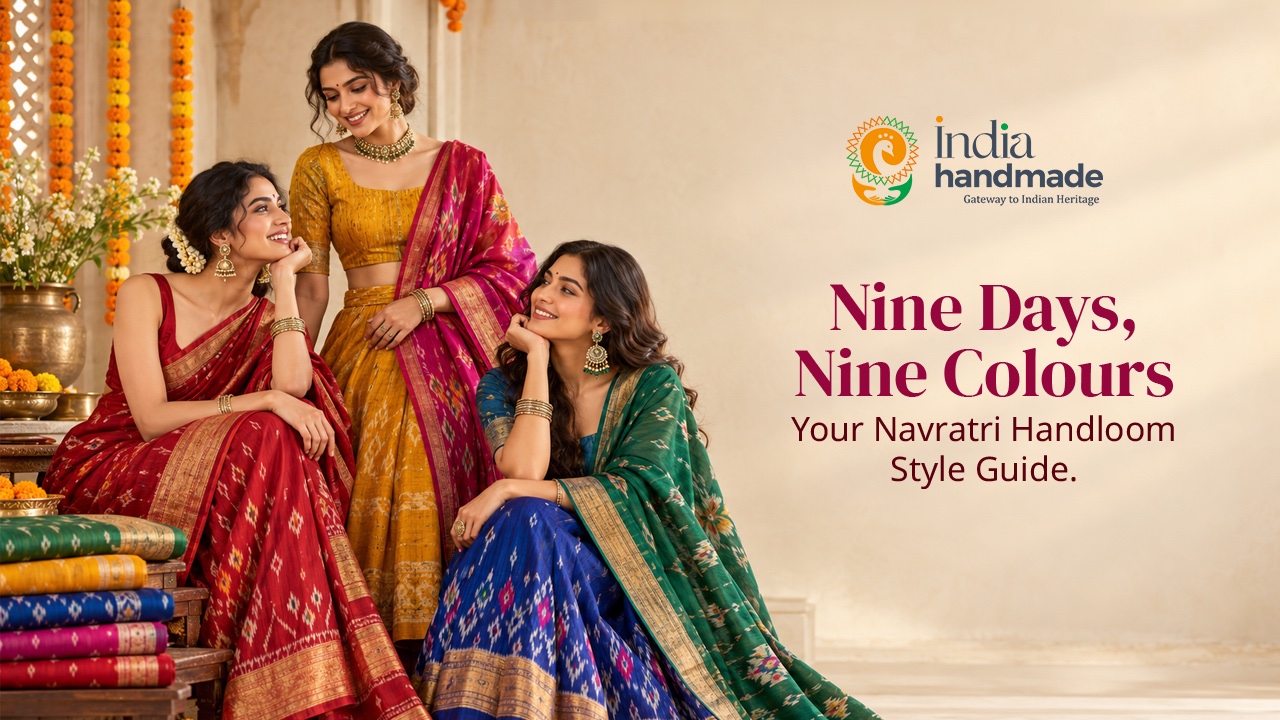
Navratri has a way of turning ordinary evenings into colourful celebrations. One day you are choosing flowers for the puja, the next you are checking the colour of the day, looking for the right earrings and wondering whether your dupatta will survive a particularly enthusiastic round of Garba.
The nine days of Navratri bring nine colours, nine moods and plenty of opportunities to dress beautifully without making your wardrobe feel repetitive. For those who love Indian textiles, the festival is also a wonderful time to bring handlooms into festive dressing. Cotton, silk, ikat, Chanderi, handblock prints and other traditional textiles can give your festive wardrobe a lovely sense of texture and character. Here is a nine-day guide to putting together a beautiful Navratri outfit with handloom
-
September 29, 2026
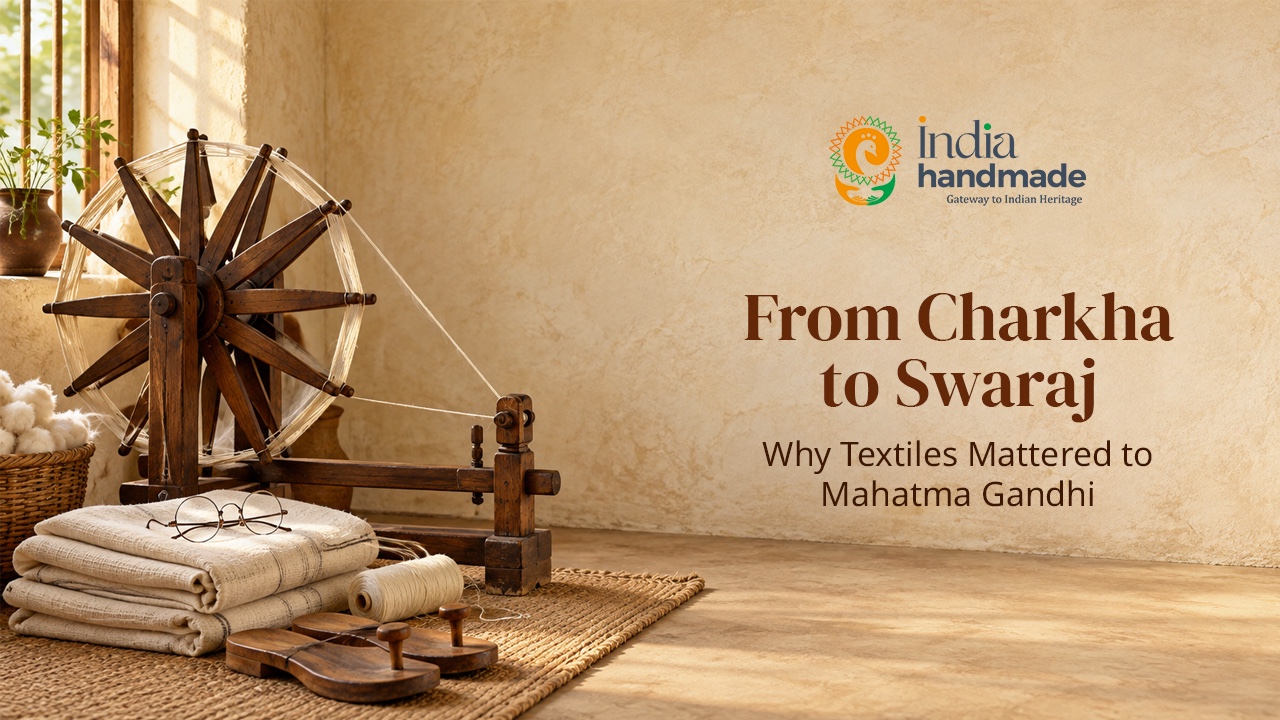
A spinning wheel may not sound like the obvious weapon of a freedom movement. It cannot break a prison gate, stop a train or scare an army. Yet, during India’s struggle for independence, the humble charkha found its way into homes, meetings, ashrams and political campaigns across the country.
For Mahatma Gandhi, the charkha represented something far bigger than spinning yarn. It connected political freedom with everyday life. What people wore, where their cloth came from and who earned money from its production became questions linked to self-reliance, dignity and Swaraj.
Gandhi’s relationship with cloth was deeply practical. He wanted Indians to understand that freedom could not remain an idea discussed in political meetings. It had to be practised in daily life. Wearing khadi,
-
September 11, 2026
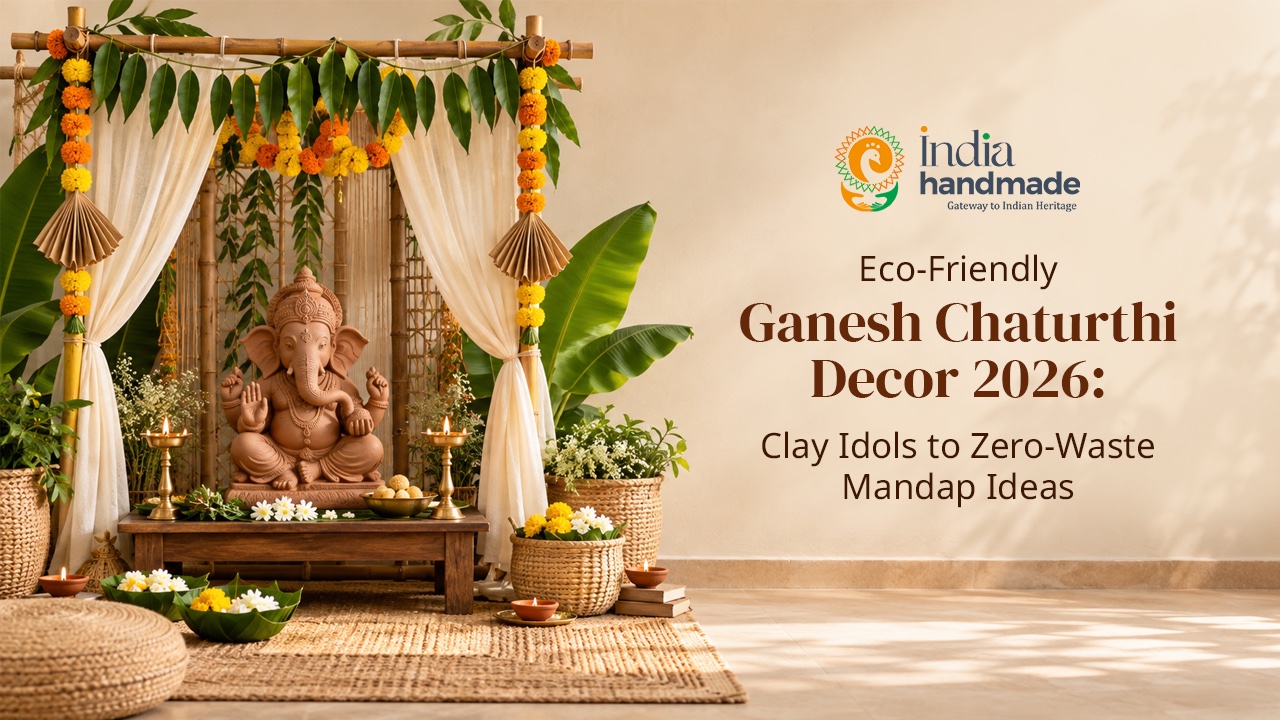
Ganesh Chaturthi is a magical festival. Homes get a little brighter, modaks mysteriously disappear from the kitchen, flowers arrive in armfuls, and suddenly everyone has a very strong opinion about where Bappa should be placed.
In 2026, Ganesh Chaturthi falls on 14 September, with Anant Chaturdashi on 25 September. As families and communities prepare to welcome Lord Ganesha, there is another idea quietly becoming part of the celebration: decorating beautifully while creating less waste.
That does not mean your mandap needs to look plain or your festive corner needs to resemble an empty shelf. Natural materials, handmade décor, reusable fabrics and thoughtful little details can create a stunning setup without relying on plastic, thermocol or excessive synthetic decoration. So,
-
September 03, 2026
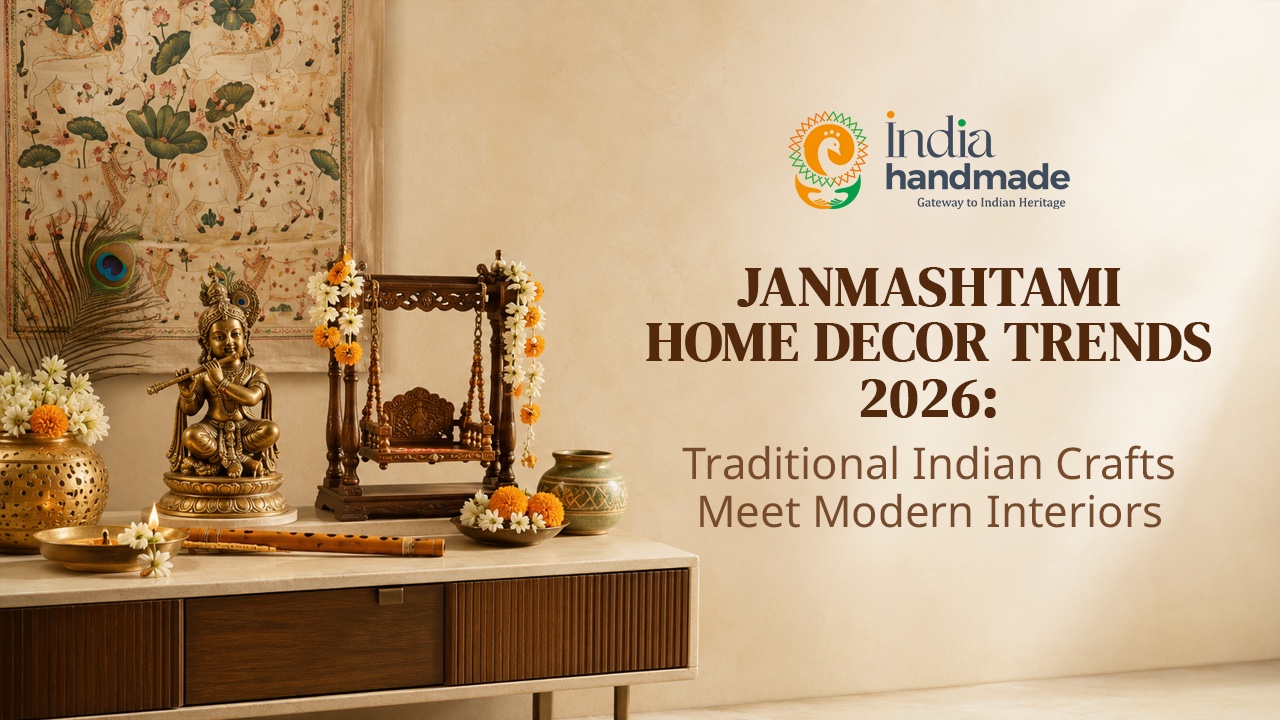
Janmashtami has a special way of changing the mood at home. Suddenly, the puja corner gets a little more attention, the brass diyas come out of the cupboard, flowers appear everywhere, and someone inevitably starts looking for a tiny jhula for Bal Gopal.
This year, Krishna Janmashtami falls on 4 September, with celebrations continuing into the following day in many places. And this year, Janmashtami home décor is taking a rather lovely turn. Instead of filling every corner with decorations, homeowners are bringing together traditional Indian crafts and contemporary interiors in a way that feels festive without making the house look like a wedding venue.
Think handcrafted brass, earthy terracotta, carved wood, handwoven textiles, traditional paintings and a few carefully chosen
-
August 06, 2026
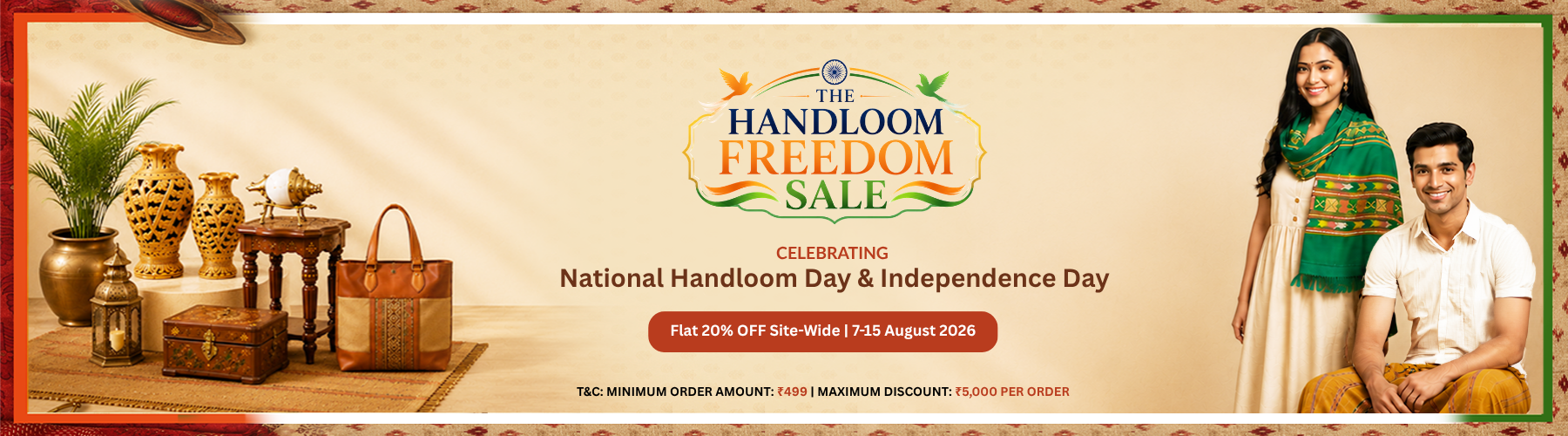
August has its own charm. The tricolour starts appearing across the streets, schools prepare for Independence Day celebrations, families begin planning festive shopping, and wardrobes suddenly feel like they need something fresh. Add National Handloom Day to the calendar, and the month becomes even more meaningful for anyone who appreciates Indian craftsmanship.
This year, there is one more reason to look forward to August. The Handloom Freedom Sale at Indiahandmade is here with exciting offers on India’s finest handloom collection. Whether you have been planning to add a timeless saree to your wardrobe, gift handcrafted products to loved ones or begin your festive shopping early, this is the perfect time.
From 7 August to 15 August 2026, shoppers can enjoy a Flat 20% OFF across
-
July 26, 2026
Have you ever bought a traditional craft thinking it was the real thing, only to later wonder whether it was genuinely made in the place it claimed to represent? You are not alone. With so many products available online and in markets, it can be difficult to tell the difference between an authentic regional craft and a product simply borrowing a famous name. This is where GI tags come into the picture.
A Geographical Indication tag helps identify products that come from a particular region and have qualities, reputation or characteristics connected to that location. From handwoven sarees to intricate embroidery, metal crafts, pottery and paintings, India has a remarkable variety of products protected under the GI system.
But how can you tell if a craft is genuinely GI tagged?
-
July 20, 2026
Have you ever seen a handloom saree and wondered why it carries graceful peacocks or borders of temples? Those patterns aren’t random. Each weave has a story to tell, a belief or blessing passed down through generations of skilled artisans.
The traditional motifs in Indian handloom sarees have been a part of India’s textile legacy for centuries. Many of them were inspired by nature, mythology, architecture and everyday life. Colours and weaving styles differ from region to region, but these motifs continue to connect people with tradition.
If you own an Indian handloom saree, it probably tells a story silently without saying a word.
The Importance of Motifs in Indian Handloom Sarees
Before printed patterns, weavers would painstakingly draw the designs on the
-
July 15, 2026
Walk through any Indian market, and one thing immediately catches your attention. Colours everywhere. Sarees flowing in vibrant shades, dupattas dancing with the breeze, shawls carrying intricate patterns and fabrics that seem to tell stories without saying a word. That is the beauty of Indian fabrics.
Every region in India has developed its own weaving style, dyeing technique and textile tradition over the past centuries. Some fabrics were once worn by royalty, while others became a part of everyday life because of their comfort and durability. Together, they represent generations of craftsmanship that continues to thrive in villages, weaving clusters and artisan communities across the country.
What makes these textiles even more fascinating is that no two handwoven fabrics
-
July 06, 2026
There are sarees that look beautiful, and then there are sarees that make people stop and ask, “Where did you get this from?” A Madhubani saree belongs to the second category.
Every motif, every line and every colour on a Madhubani saree carries a piece of Bihar’s artistic legacy. What makes these sarees special is that they do not rely on glitter, heavy embellishments or changing fashion trends. Their charm comes from storytelling. A fish may symbolise prosperity. A peacock may represent beauty. A tree may speak of life and harmony.
At a time when wardrobes are overflowing with machine-made clothing, handcrafted textiles bring back a sense of warmth and individuality. A Madhubani saree offers exactly that. It carries the touch of an artisan, the beauty of folk art and the elegance
-
June 27, 2026
India’s relationship with clay goes back several millennia. Archaeological findings suggest that people across the subcontinent were making terracotta figurines, toys, vessels and decorative objects long before many organised civilisations emerged elsewhere.
The terracotta craft in India developed because clay was readily available, affordable and versatile. A skilled artisan could transform a lump of earth into a water pot, a decorative horse, a temple panel or even a child’s toy. Few materials offered such flexibility.
What makes terracotta special is its closeness to everyday life. Gold and silver belonged to the wealthy. Marble adorned grand monuments. Clay belonged to everyone.
Terracotta in the Indus Valley Civilisation
The earliest chapter of the terracotta