

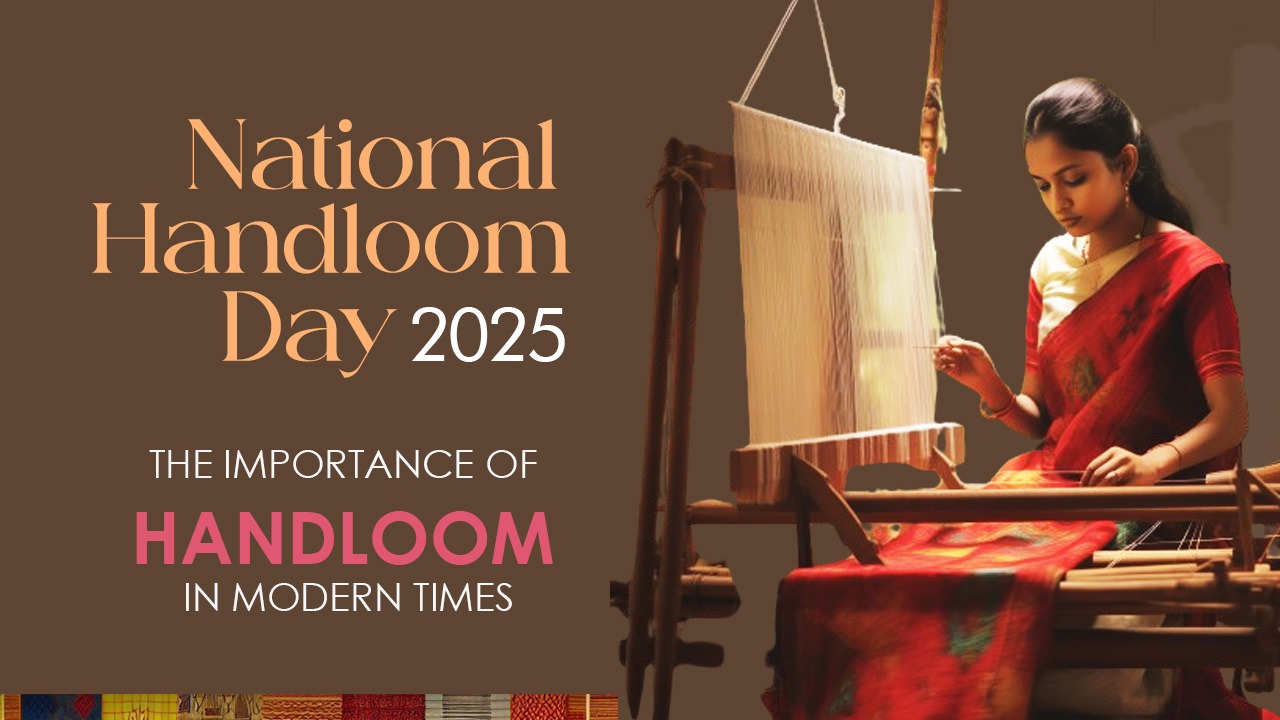
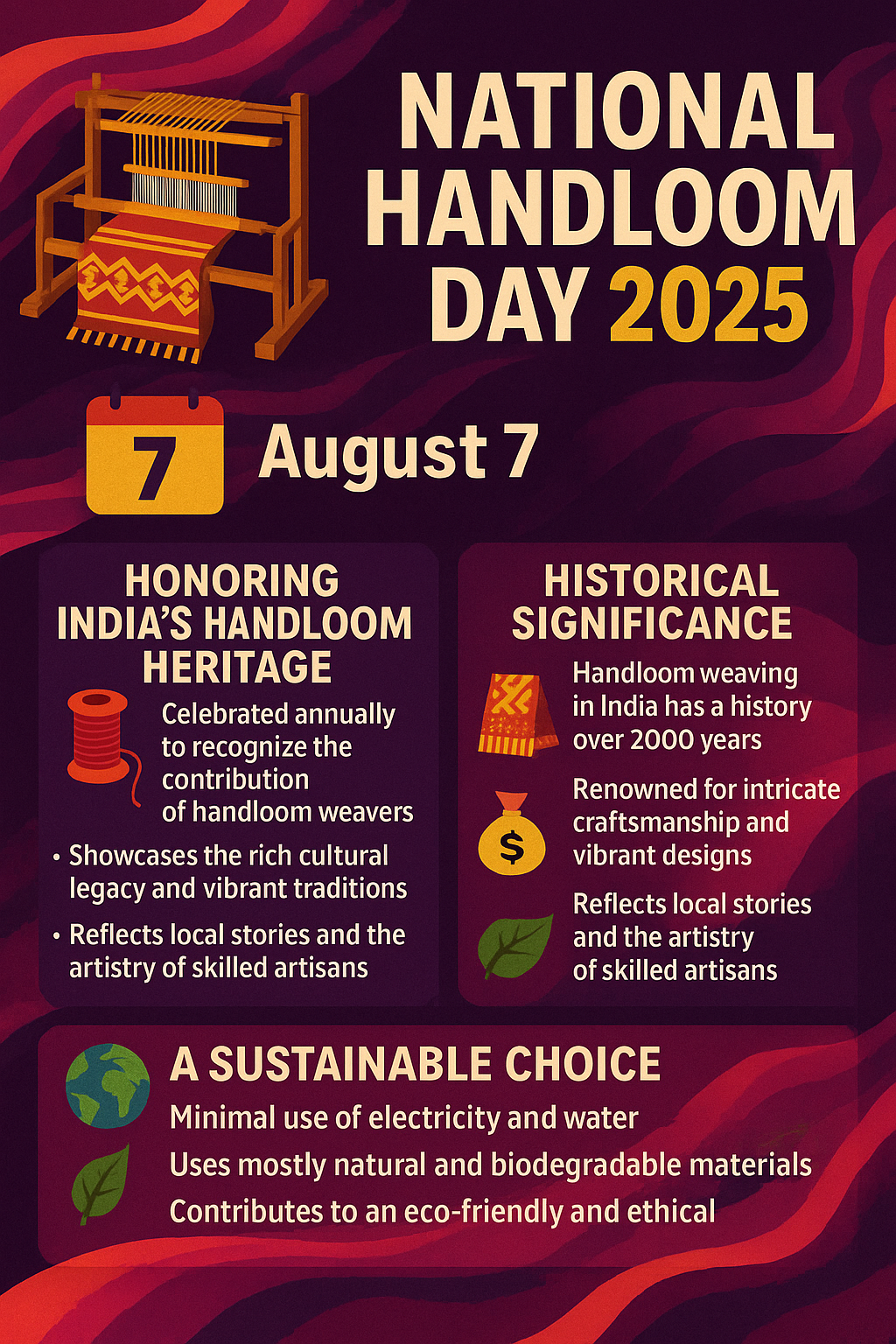
Every year on 7th August, India celebrates National Handloom Day to honour the handloom weaving community and recognize the rich cultural heritage woven into the very fabric of Indian society. It’s not just a tribute to the craftsmanship of our weavers but also a reminder of the pivotal role handloom plays in empowering rural artisans and sustaining traditional crafts.
In this blog, let’s explore the history, significance, importance, and impact of National Handloom Day—and answer some of the most commonly asked questions about this important occasion.
History of National Handloom Day
The Government of India declared 7th August as National Handloom Day in 2015, with the inaugural celebration held in Chennai. But the choice of this date has deep historical relevance:
On 7th August 1905, the Swadeshi Movement was formally launched during the British era at the Calcutta Town Hall, urging Indians to boycott foreign goods and revive indigenous industries—particularly handloom.
By commemorating this day, we remember our freedom fighters’ call for self-reliance and the pivotal role Khadi and handloom played in India's struggle for independence.
Significance and Importance of National Handloom Day
1. Honouring the Weavers of India
Handloom weaving is not just a craft—it's a way of life for millions of Indian families. National Handloom Day gives a platform to celebrate their contribution to the economy, culture, and sustainable fashion.
2. Preserving India’s Rich Textile Heritage
From Banarasi silk of Uttar Pradesh to Pochampally Ikat of Telangana, India’s handloom legacy spans centuries. This day reminds us to cherish and preserve these traditional weaves for future generations.
3. Promoting Swadeshi and Vocal for Local
Celebrating handloom is also about being “Vocal for Local”—supporting indigenous industries and encouraging people to choose handmade, sustainable products over mass-produced ones.
4. Empowering Rural Artisans and Women
A large section of handloom artisans are from rural India, with women forming a significant portion. Handloom provides employment, independence, and identity to these weavers, uplifting entire communities.
Impact on Rural Artisans and Weavers
Economic Upliftment
The handloom sector is the second-largest source of employment in India after agriculture. Government schemes like IndiaHandmade portal, Cluster Development Programmes, and Handloom Mark initiatives are helping artisans market their products globally.
Women Empowerment
Nearly 70% of handloom workers are women. The sector promotes gender equality and offers women an opportunity to earn while working from home, especially in regions where industrial jobs are scarce.
Skill Preservation
Artisans across India use skills passed down through generations. Supporting handloom sustains these ancient techniques, such as Chikankari, Bandhani, Kanjeevaram, and Patola.
Sustainability and Eco-Friendliness
Handloom products are largely eco-friendly, made without using electricity or synthetic materials. This reduces the carbon footprint and supports a green lifestyle.
Popular FAQs about National Handloom Day
Why is National Handloom Day celebrated?
National Handloom Day is celebrated to honour India’s weavers, preserve handloom traditions, and promote awareness about handmade textile products that are part of India's cultural and economic identity.
What is the importance of 7th August in India?
August 7 marks the launch of the Swadeshi Movement in 1905—a call to reject foreign goods and support Indian-made products, especially handlooms. National Handloom Day was chosen on this date to honour that spirit of self-reliance.
राष्ट्रीय हथकरघा दिवस क्यों मनाया जाता है?
राष्ट्रीय हथकरघा दिवस 7 अगस्त को देशभर में हथकरघा बुनकरों के योगदान को सम्मानित करने और भारत की पारंपरिक बुनाई कला को बढ़ावा देने के लिए मनाया जाता है। यह दिन ‘स्वदेशी आंदोलन’ की याद दिलाता है, जब भारत ने विदेशी वस्तुओं के बहिष्कार और देशी उत्पादों को अपनाने का संकल्प लिया था।
Why is it called handloom?
A handloom is a manually operated device used for weaving fabric without electricity. The term reflects the technique of weaving cloth by hand, symbolizing artistry, patience, and tradition.
What is the symbol of Indian handloom?
The “Handloom Mark”, launched by the Government of India, is the official symbol to certify genuine handloom products. It helps consumers identify authentic handmade textiles and protect the interests of weavers.
Who is the father of handloom?
While there isn’t a single “father of handloom,” Mahatma Gandhi is often revered for reviving handloom weaving through the Khadi movement. His advocacy for spinning the charkha and wearing khadi made handloom a symbol of national pride.
How many types of handlooms are there?
India boasts over 135 unique handloom weaving styles, including:
- Banarasi
- Kanjeevaram
- Chanderi
- Ikat (Odisha, Telangana, Gujarat)
- Bhagalpuri Silk
- Patola
- Phulkari
- Pochampally
- Jamdani
Each region has its own distinct loom techniques, motifs, and fabrics.
What are the best handloom products to buy on National Handloom Day?
On National Handloom Day, consider buying beautiful handloom products that showcase India's rich cultural heritage. For women, handloom sarees like Banarasi, Chanderi, Muga, Baluchari, and Sambalpuri are excellent choices, as are handmade kurtis and blouses with unique designs and patterns. Men can opt for elegant handloom kurtas in traditional or modern styles. One can also opt for home furnishing products like; natural fiber rugs, cotton bedsheets, pillow cover, cushion covers and blankets, handloom curtains are great options. These products not only reflect India's craftsmanship but also support local artisans and the handloom industry.

Celebrate National Handloom Day: How You Can Support
- Buy Handloom Products: From sarees to home décor, choose handloom over machine-made items.
- Promote Local Artisans: Share their stories on social media. Tag platforms like IndiaHandmade that support artisans directly.
- Gift Handloom: Encourage gifting of handmade products during festivals and celebrations.
Weaving the Future with the Past
National Handloom Day is not just a day—it’s a movement. It calls us to reconnect with our roots, respect the hands that weave magic into threads, and take pride in India’s unparalleled textile diversity.
When you buy a handloom product, you don’t just buy fabric—you support a weaver, a family, and a culture. Let’s preserve this legacy and be a part of the handmade revolution.
Let us pledge this Handloom Day to wear Indian, support artisans, and embrace the heritage that runs through every thread of our handwoven fabrics.
Watch the video, exclusively made for our artisans who want to know more about Indiahandmade.
About Indiahandmade - In English:
About Indiahandmade - In Hindi: