


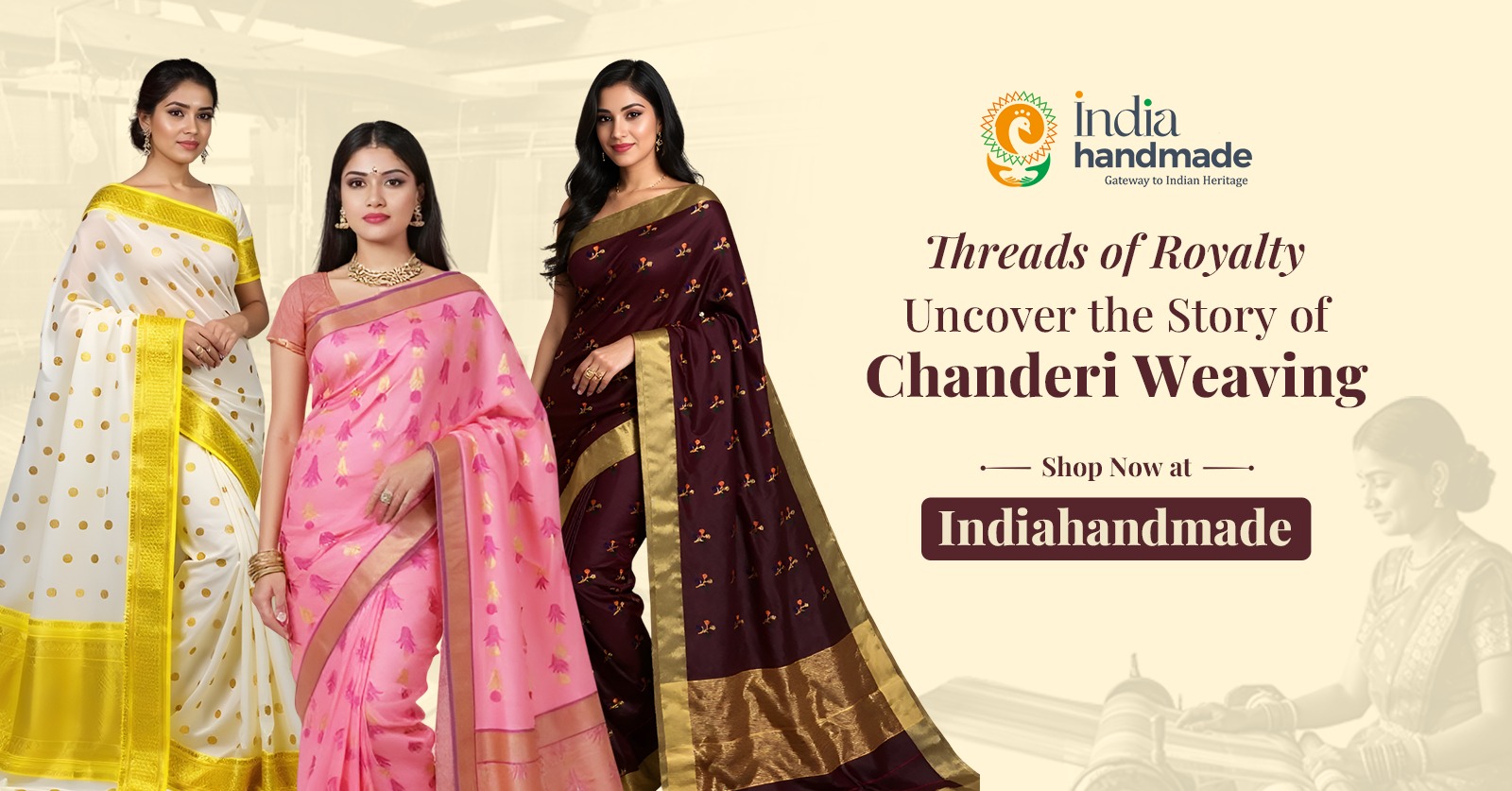
Madhya Pradesh holds secrets whispered not by stone, but by thread. Deep within the ancient town of Chanderi, a tradition lives, breathed into existence by the steady, rhythmic thump of the handloom. This is not a mere fabric; this is a textile narrative, a delicate, almost mythical drape that carries the weight of centuries and the lightness of air. To hold a piece of Chanderi is to feel the history of kings, the devotion of artisans and the sun-drenched spirit of Central India. It is a story woven with silk, cotton and the shimmer of zari, a saga of gossamer beauty.
The Ancient Loom: A Tapestry Woven with Time
The origins of Chanderi fabric stretch back so far that they blur the lines between history and legend. Local lore connects the weave to the Vedic period, suggesting a divine, ancient lineage. Some tales credit Shishupala, a cousin of Lord Krishna, with first bringing this fine weaving art to the region. While mythology provides a beautiful foundation, historical accounts place Chanderi town as a crucial centre for textile production between the 7th and 12th centuries. Its geographical position, straddling the Malwa and Bundelkhand regions, made it a vital stop on the ancient trade routes, allowing its textiles to travel far and wide.
It was, however, the arrival and settlement of the Koshti weavers from Jhansi in the 1350s that significantly boosted the production, refining the technique to an exquisite degree. The true flourishing of Chanderi’s renown came during the reign of the Mughal Empire. The royal courts prized the fabric for its unparalleled transparency and softness. A simple fact tells the story of its fineness: early Chanderi muslins, woven from cotton counts as high as 300, were so fine that a fifteen-yard piece, one yard wide, reportedly weighed under a mere nine hundred grams. This sheer quality, this muslin-like delicacy, became the defining characteristic that made it a favourite among queens and nobility.
The fabric’s journey, like the history of the region, saw periods of decline. The waning of the Mughal power affected its patronage. Yet, the craft survived. A great revival took place in the early 20th century, largely thanks to the Scindia family of Gwalior. It was under their discerning patronage that the weavers introduced mill-spun cotton, and critically, the golden zari thread, transforming the fine weave into the regal, shimmering textile we recognise today. This transition cemented Chanderi’s identity, elevating it from a fine cotton muslin to a luxurious silk and cotton blend, adorned with metallic splendour.
The Anatomy of Sheer Elegance: Materials and Composition
What sets a Chanderi textile apart is its unique structural composition, a masterful balance achieved by blending distinct materials. The fabric is defined by its gossamer texture, a sheer quality known locally as ‘bādal’, or cloud-like. This lightness is achieved through the meticulous selection and treatment of the yarns.
Three Types of Chanderi
The weave traditionally comes in three distinct variations, each offering a different appeal:
- Pure Cotton Chanderi: This is the original weave, prized for its extreme lightness and breathability, a perfect companion for India’s warm climate. It embodies understated elegance with its soft, subtle drape.
- Silk Chanderi (Pure Silk): Woven entirely from silk threads, this variant provides a smoother finish and a pronounced, regal sheen. It is reserved for grander occasions, valued for its luxurious fall and rich look.
- Silk-Cotton Chanderi: The most popular contemporary blend, this fabric unites the best qualities of both fibres. The silk threads, often used in the tana (warp), lend lustre, while the cotton threads, often forming the bana (weft), contribute to the textile’s famed sturdiness and airiness. It is this specific blend that captures the quintessential Chanderi look, lustrous yet transparent.
The zari thread, metallic threads of gold, silver or copper, is the third element of the weave. Earlier, pure gold and silver were used, a testament to its royal status. Today, polished copper or synthetic threads replace the precious metals, but they are still woven into the fabric using techniques that ensure the motifs retain their historical precision and rich sparkle. The combination of degummed silk or fine cotton with this delicate zari creates a play of light and shadow, giving the fabric its distinctive, almost magical, translucent quality.
The Weaving Process of Chanderi
The creation of a Chanderi fabric remains a profoundly human process. It takes place entirely on handlooms, often the traditional pit looms, where the weaver sits with their legs in a pit, allowing for better control over the treadles. This is not factory work; this is a craft of patience, precision and tradition passed down over generations. The journey begins long before the loom.
Chanderi Weaving: Yarn Preparation
The cotton yarn, now often sourced from places like Coimbatore, and the silk, from Karnataka, undergo meticulous preparation. The yarns are first cleaned, sorted and tested for consistency. A unique and traditional aspect of Chanderi preparation is the process of setting the taana (warp). Rather than using modern warping machines, many artisans adhere to the older technology of preparing a taana roll, where bundles of thread are manually stretched out on hooks driven into the ground. This time-intensive method, though requiring more space and manpower, is preserved as a mark of tradition.
Next comes dyeing. While the weave was historically known for its light, subtle hues, such as kesari (saffron) or badami (almond), contemporary Chanderi embraces a wide palette, from vibrant fuchsia pink to deep navy blue. Natural dyes, when used, are prepared with great care, ensuring the longevity and richness of the colour.
Chanderi Weaving: The Loom Work
The setting of the warp on the loom is a ceremony in itself, preparing hundreds of fine threads to form the canvas. The weaver then employs the Jacquard or Dobby mechanism, mounted on the handloom, to create the intricate patterns.
The most distinctive part of the Chanderi weaving process is the technique used to weave the butis (small motifs). These are created using the extra weft technique. The artisan works with small needles (sui) of different sizes, painstakingly weaving the zari threads into the fabric’s body. This is a highly skilled, piece-by-piece insertion of the motif threads, independent of the main weft, ensuring the metallic design stands out in sharp relief against the sheer background. The quality of this buti work, its precision and its density largely determine the value and beauty of the final textile.
A single, elaborately designed saree can take weeks, even months, to complete. Every rhythmic throw of the shuttle is an act of preserving a heritage. The final product is carefully starched and finished, bringing out the signature lustre and crisp drape.
The Geographical Identity: GI Tag and Community
The authenticity of this exquisite weave is formally protected. In 2005, Chanderi weaving received the Geographical Indication (GI) Tag. This important certification ensures that a textile can be rightfully called ‘Chanderi’ only if it has been produced using the traditional methods within the designated geographical area of the Chanderi town in Madhya Pradesh. This recognition safeguards the heritage, the unique technique and the livelihood of the community.
The weaving industry sustains the majority of the population in the old town. For the artisans, the weavers, dyers, winders and zari workers, this is more than a profession; it is an inherited way of life. The rhythmic click-clack of the loom is the constant background score of the town, an audible marker of a craft that survives and thrives in the modern world.
Embrace the Handloom Legacy of Chanderi
Experience the sheer magic and historical opulence of Chanderi weaving. Explore and purchase authentic Chanderi handloom sarees, dress materials and dupattas directly from the artisans of Madhya Pradesh at Indiahandmade.com.