

A Fabric Woven with Heritage and Resistance
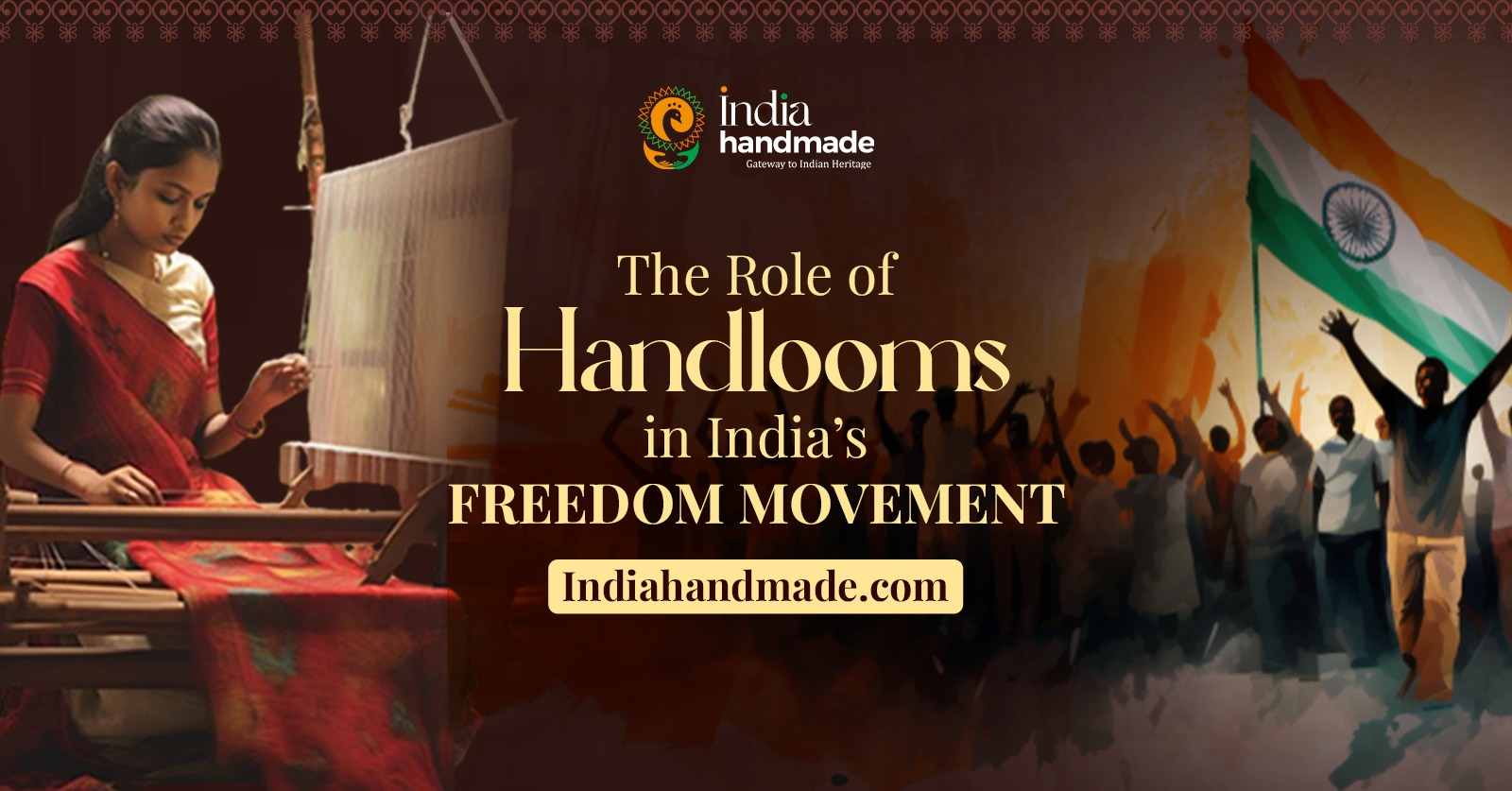
India’s handloom sector is not just about threads, weaves, and colors—it's about stories, identity, resistance, and heritage. As we celebrate National Handloom Day on August 7 and Independence Day on August 15, it’s a moment of reflection on how deeply the handloom movement was entwined with India’s struggle for freedom. Every thread spun by hand and every piece of cloth woven on a traditional loom carried with it the power of self-reliance, cultural pride, and defiance against colonial rule.
Handloom in India is one of the oldest surviving traditions, dating back thousands of years, with references in ancient scriptures, literature, and art. Each region developed its own style, whether it was the Banarasi brocade, Chanderi silk, Pochampally ikat, or Kanjeevaram. These handcrafted textiles have been an integral part of Indian culture—used in rituals, ceremonies, and daily life—forming a tangible link between the people and their heritage. The richness of Indian textiles was once the envy of the world and a vital part of India’s global trade network.
However, British colonization disrupted this balance. India was turned from an exporter of fine textiles to an importer of cheap, machine-made British cloth, decimating the local handloom economy. But what the colonizers failed to destroy was the spirit of the weaver and the resilience of tradition. Mahatma Gandhi recognized this and transformed the humble spinning wheel (charkha) into a powerful symbol of self-sufficiency (swadeshi), igniting a nationwide movement that turned textiles into tools of protest and pride. The handloom sector, thus, became not just an economic force, but a political one—woven into the very fabric of India’s independence movement.
British Colonialism and the Decline of Indian Handlooms
Before the British colonized India, Indian handloom products were globally renowned for their superior craftsmanship and intricate designs. Indian cotton and silk fabrics were highly sought after in Europe, the Middle East, and Southeast Asia. The Mughal Empire, for instance, had flourishing trade networks that exported muslin, chintz, and calico from Bengal and Gujarat to all corners of the globe.
However, the arrival of the British East India Company changed the fate of the Indian textile industry. By the late 18th century, British policies had effectively destroyed indigenous handloom production. Heavy taxes were imposed on Indian weavers, and raw materials were exported to Britain, only to be re-imported as finished goods. The British flooded Indian markets with cheap, mass-produced textiles, making it impossible for local artisans to compete. The destruction was so severe that entire weaving communities were left impoverished.
This exploitation didn’t just affect the economy—it dealt a blow to India's cultural pride. With each traditional weaving cluster collapsing, a piece of India's heritage was lost. But the response to this cultural and economic oppression would lay the foundation for one of the most powerful freedom movements the world has ever seen.

The Swadeshi Movement and the Revival of the Spinning Wheel
The Swadeshi Movement, launched in 1905 during the Bengal Partition, was a direct response to British economic policies. It urged Indians to boycott foreign goods and revive local industries, especially textiles. Handlooms and khadi—homespun cloth—became central to this campaign. Mahatma Gandhi championed khadi not just as a fabric, but as a philosophy.
Gandhi’s call for spinning khadi at home was a political act of non-cooperation and resistance. He believed that self-reliance in clothing production would lead to economic independence, which in turn would pave the way for political freedom. Gandhi traveled across India, encouraging people to abandon British cloth and take up spinning. The charkha became a symbol of empowerment—so much so that it was included in the early versions of the Indian national flag.
This movement brought handloom back into national consciousness. Rural weavers found purpose and pride in their work again. The elite also began wearing khadi, discarding their luxurious British imports to show solidarity with the freedom struggle. For the first time in centuries, weaving was not just an economic activity but a patriotic act.
Women, Weaving, and the Silent Revolution
Women played a pivotal role in the handloom movement during the freedom struggle. Spinning and weaving, once seen as domestic chores, were redefined as acts of courage and nation-building. Gandhi often emphasized the role of women in the Swadeshi movement, and many took up the charkha as their own weapon of resistance.
Women like Kasturba Gandhi and Sarojini Naidu were frequently seen promoting khadi, and countless unnamed village women contributed to the cause by spinning cotton and sewing garments for freedom fighters. In doing so, they participated in a silent revolution—redefining both their roles in society and their relationship with the nation.
This resurgence of traditional crafts also laid the groundwork for a cultural renaissance. The emphasis on handloom helped revive folk arts, regional identities, and indigenous techniques that had nearly vanished under colonial rule. It reconnected people with their roots and fostered a sense of unity amidst diversity.
Charkha as a Political and Philosophical Tool
The charkha, or spinning wheel, wasn’t merely a utilitarian device in Gandhi’s India. It became a philosophical emblem of non-violence (ahimsa), simplicity, and self-determination. To spin was to serve the nation. The image of Gandhi sitting cross-legged, spinning cotton on his charkha, is one of the most iconic representations of India’s freedom movement.
The charkha inspired poetry, art, and literature. It became a centerpiece of the Constructive Programme—a vision Gandhi developed for rebuilding the nation through education, sanitation, and rural upliftment. In his view, handloom and handicrafts were essential to empowering villages, which he saw as the backbone of the nation.
Post-Independence: Preserving the Legacy of Handlooms
After India gained independence in 1947, efforts were made to revive and preserve the handloom sector. Institutions like the All India Handloom Board were set up, and khadi was promoted as a symbol of national pride. Designers, artists, and cultural organizations collaborated with artisans to bring traditional weaves into the modern market.
Despite facing competition from power looms and synthetic fabrics, the handloom industry still supports millions of weavers across India today. Each handloom product is a narrative of a place, a culture, and a people. It is not merely a piece of cloth, but a legacy passed down through generations.
The 7th of August was declared National Handloom Day in 2015, marking the launch of the Swadeshi Movement in 1905. This observance honors the contribution of weavers to the fabric of India—both literal and metaphorical. It reminds us of the sacrifices they made during the freedom struggle and the richness they continue to add to our cultural identity.
Handlooms Today: A Bridge Between Past and Future
In modern India, handlooms have found a renewed relevance. From sustainable fashion to conscious consumerism, there’s a growing appreciation for slow-made, handcrafted textiles. Indian designers are championing handloom fabrics on global platforms, bringing spotlight back to crafts like jamdani, patola, and bhujodi.
Initiatives like "Vocal for Local" and “Make in India” have reinvigorated conversations around reviving indigenous industries, echoing the Swadeshi spirit once again. Handloom cooperatives, NGOs, and entrepreneurs are working together to empower artisans, preserve dying crafts, and ensure fair wages and dignity for weavers.
Furthermore, handloom products are increasingly being incorporated into office wear, festive fashion, and even corporate gifting, proving that they are not just relics of the past but also vibrant parts of our present and future.
Threads That Bind a Nation
As we celebrate Independence Day and National Handloom Day this August, we are reminded that freedom is not just political—it is cultural, economic, and personal. The handloom sector embodies this holistic vision of freedom. It speaks of a time when spinning a thread was an act of rebellion, when wearing homespun cloth was a badge of honor, and when craftspeople became quiet revolutionaries.
Today, choosing handloom is more than a fashion statement—it’s a tribute to the weavers who shaped our freedom, a nod to sustainability, and a celebration of India’s unmatched textile legacy. Let us honour their spirit by keeping their art alive, their voices heard, and their threads unbroken.