

For hundreds of years, the sound of artisans carving patterns into wooden blocks, the aroma of natural dyes mixing with water and the bright patterns coming to life on fabric have all been part of India’s culture. Hand block printing is more than just a way to decorate fabrics; it is a tradition that has been passed down through the years and tells stories of strength, creativity and art. It shows how different regions are, how rich the imagination is and how deeply people are connected to their surroundings. Every piece that is printed by hand has its own identity, which is shaped by the artisan’s skill and the history of the craft.
This ancient art form is still around because of the skilled hands that won’t let it fade. It continues to thrive because communities value their roots while also adapting to the changing needs of fashion and design. Hand block printing is where history and art come together, and each piece printed has the spirit of the person who made it. Let’s take a closer look at this craft that has lasted for hundreds of years, how it works, what it means to different cultures and how it has survived.
The Origins of Hand Block Printing
For more than a thousand years, people in India have been doing hand block printing. Ancient texts, archaeological finds and mentions in royal court documents all point to the fact that printed textiles were used for more than just everyday wear. They were also used for religious and ceremonial purposes. Rajasthan, Gujarat, Madhya Pradesh and some parts of Uttar Pradesh are the areas where this craft is most closely linked.
People know that Rajasthan has beautiful, detailed prints, especially in cities like Sanganer and Bagru. Bagru prints are known for their earthy colours, geometric shapes and patterns that are based on nature. Sanganer prints, on the other hand, are known for their delicate floral patterns and complex symmetry. Kutch in Gujarat is also known for its bold designs and bright colours, which are often made with vegetable dyes from the area.
The artisans in these places learnt their craft from their ancestors, keeping alive methods that require precision, patience and a deep understanding of how fabric and dye work. These centres are still the best places to learn how to hand block print, even with the advent of modern printing technology. This is because they are dedicated to authenticity.
The Process of Hand Block Printing
To do hand block printing, you need to know a lot about the materials, tools and methods. It takes a long time and is very careful. Here is a step-by-step guide to how this timeless art form comes to life:
Carving the Blocks
The first thing to do is design and carve the blocks. People usually make blocks out of seasoned teakwood or other hardwoods that are strong and can hold fine details. Using chisels and knives, skilled artisans carve patterns. They often get ideas from plants, animals, shapes, buildings or stories from mythology.
You need to be very careful when carving a block because even a small mistake can change the print. Some blocks are simple and have patterns that repeat, while others are more complicated and have designs that are layered and need to be lined up carefully when printing.
Getting the Fabric Ready
The fabric is washed and treated to get rid of any oils, starches or other impurities that might get in the way of dye absorption. People often use cotton, silk or linen because they soak up the dye easily. After cleaning, the fabric is pulled and laid flat on a wooden platform.
Mixing the Dyes
Natural dyes are often used in hand block printing. They come from roots, leaves, bark and minerals. There are a lot of reds, blues, yellows and earthy tones in the palette that comes from indigo, madder, pomegranate rind, iron filings, turmeric and other organic materials. Generations have passed down the knowledge of how long to soak, how much heat to use and how different fibres react to different dyes.
Hand Printing
The artisan dips the carved block into the dye paste and then presses it down on the fabric. To make sure the pattern transfers completely without bleeding, the pressure has to be just right. You need to have good muscle control, good eye coordination and good intuition that comes from years of practice to do this step.
The blocks are carefully lined up so that the patterns flow smoothly. You can print layers of designs one after the other, but you have to let each one dry completely before printing the next one.
Drying and Setting the Colours
The fabric is left to dry in the shade after it has been printed. The fabric may become weaker, or the dye’s colour may change if it is exposed to direct sunlight. After the fabric has dried, it is treated to set the colours. This can be done by boiling, steaming or pressing, depending on the type of dye and fabric.
Final Touches
After the printing and dyeing are done, the fabric is ironed and softened to make it feel and look better. Then it’s ready to be sewn into clothes, home décor or accessories.
You need to be patient and dedicated at every step, and if you make a mistake, the whole thing can fall apart. This is what makes each piece of hand-block printed fabric different.
The Motifs and Meanings Behind the Patterns
Block prints are more than just pretty pictures; they tell stories, show what people believe and show the world around them. Some common themes are:
- Floral Patterns: Floral patterns stand for growth, beauty and plenty. They often get ideas from plants that grow in the area, like lotus, jasmine or marigold.
- Geometric Shapes: These patterns give the designs rhythm and structure, and they often stand for balance and harmony.
- Animal Motifs: Peacocks, elephants, parrots and deer are common, and they stand for nature’s spirit, grace and wealth.
- Religious Symbols: Religious symbols like mandalas, sacred trees and temple designs are used in ceremonial prints that are used during festivals and rituals.
People pick patterns not only because they look good but also because they are culturally important. This close link between pattern and meaning has kept the craft alive for generations, with artisans coming up with new ideas while still following the old ones.
Sustainability and Eco-Friendly Practices
One of the best things about hand block printing is that it lasts a long time. Screen printing and digital printing use a lot of chemicals and energy, but hand block printing uses natural materials and a process that doesn’t harm the environment.
- Natural Dyes: Using plant-based dyes ensures that fabrics are biodegradable and don’t have any harmful chemicals in them. Artisans make very little waste by using things like crushed leaves or bark again.
- Water Conservation: Dyeing needs water, but careful methods are used to cut down on waste. Artisans use only the right amount of water and recycle it whenever they can.
- Slow Production: The slow pace of printing, while time-consuming, keeps too much from being made and encourages people to think about what they buy. This cuts down on the carbon footprint of making things in large quantities.
- Handcrafted Quality: Block-printed fabrics last a long time and are strong, unlike synthetic prints that wear out quickly. The colours, patterns and textures stay nice even after being washed many times.
How Does Hand Block Printing Inspire Contemporary Design?
Hand block printing has not been stuck in the past. Designers and fashion houses are rethinking their patterns for today’s shoppers, combining old styles with new ones.
- Apparel: Block prints are used to make clothes that never go out of style, like sarees, kurtas, dresses and scarves.
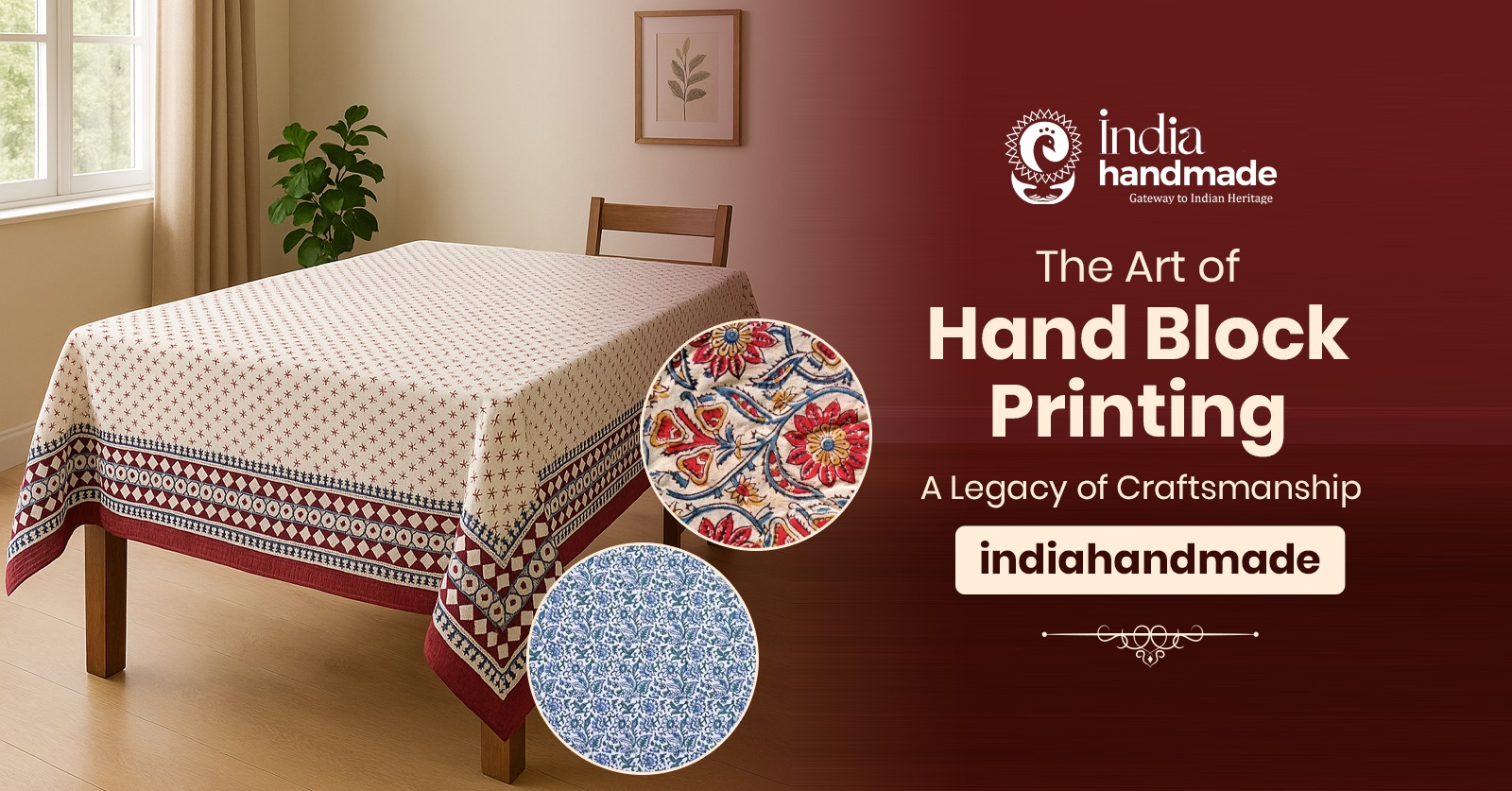
- Home Décor: Cushion covers, bedspreads, table runners and curtains now have bold block prints on them, which make living spaces look more elegant and cosy.
- Accessories: Accessories like bags, shoes and even stationery are more and more often using hand-printed designs, which make them stand out.
- Global Influence: Designers around the world appreciate the intricacy and heritage of block prints, adapting them into fusion styles without compromising their essence.
Hand Block Printing Is a Legacy Worth Preserving
Hand block printing is more than just a skill; it’s an art form that comes from tradition, culture and being aware of the environment. It is a legacy that has been shaped by patient hands, creative minds and generations of craftspeople who are determined to keep their culture alive.
You can celebrate craftsmanship, embrace authenticity and support artisans whose work is an expression of identity and art by bringing these pieces into your home or wardrobe. Every piece of block-printed fabric is a piece of living history that continues to inspire, teach and improve lives.
Help the artists and keep this craft alive. Check out the hand block print collection at Indiahandmade and join a movement that values heritage, beauty and sustainability made by people.