

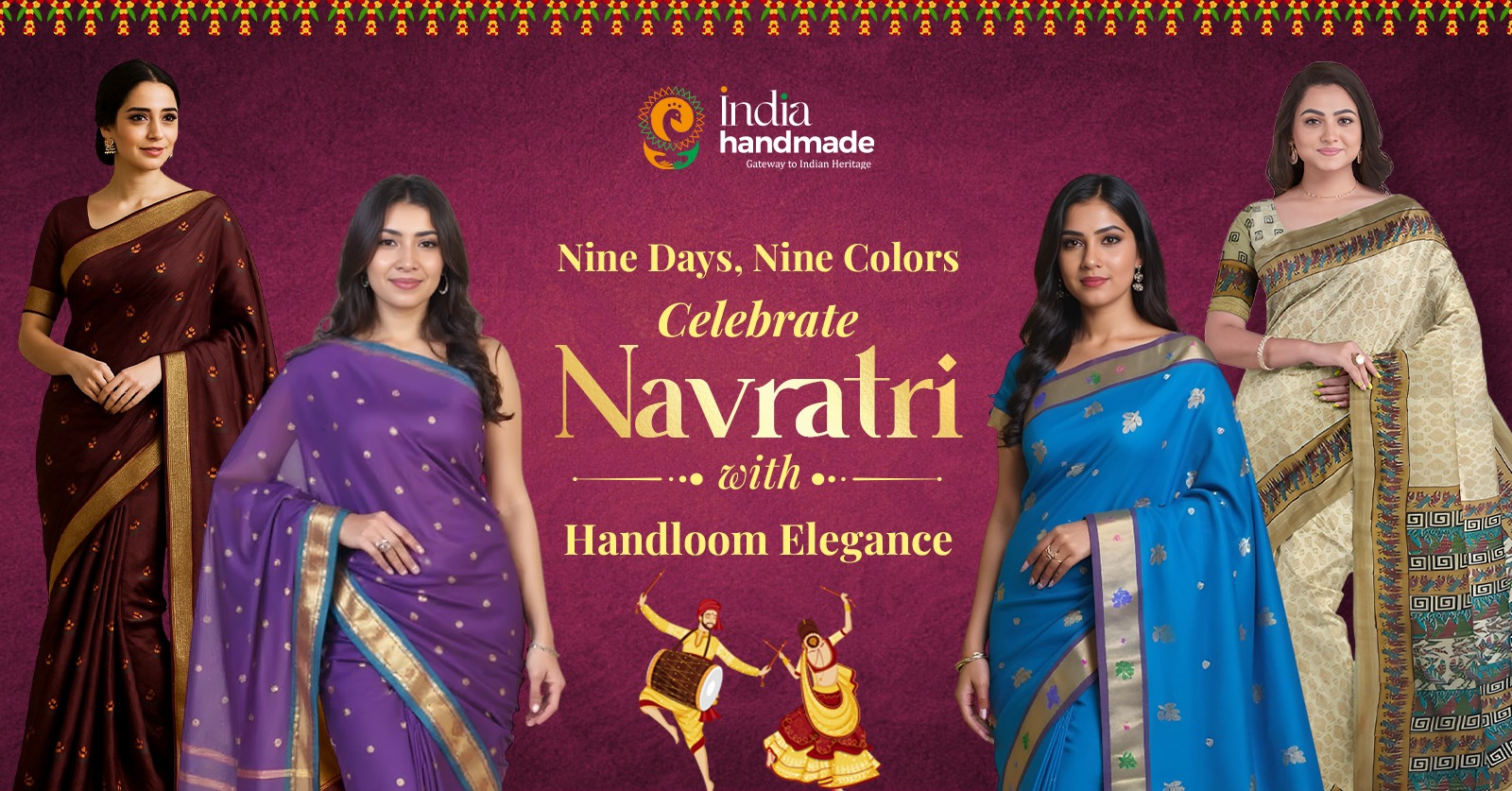
Navratri is one of the most vibrant and spiritually uplifting festivals celebrated across India. Rooted in devotion and tradition, this nine-day celebration honours Goddess Durga and her various forms. The festival signifies the victory of good over evil and brings families, communities and entire cities together through prayer, music, dance and cultural rituals. What makes Navratri unique is not only its spiritual essence but also the rich symbolism carried through colours, customs and attire. Each day is dedicated to a specific colour, which holds deep meaning and is believed to channel positivity and blessings.
In recent years, people have embraced the festival in modern ways, yet the essence of wearing traditional attire remains intact. Handloom textiles, known for their authenticity, artistry and sustainable charm, beautifully capture the spirit of Navratri. They allow us to connect with heritage while celebrating in style. By aligning each day’s colour with handloom outfits, the festival becomes even more special, turning rituals into a statement of grace and cultural pride.
The Importance of Navratri in Indian Culture
Navratri, meaning “nine nights”, holds immense cultural and spiritual significance in India. The festival is celebrated differently across regions, yet its underlying message remains the same. In the north, devotees observe fasts and recite prayers to Goddess Durga. In the west, particularly Gujarat, Garba and Dandiya Raas fill the nights with music and dance. In the east, Durga Puja takes centre stage with grand processions and artistic pandals. The south reveres the festival with Golu displays, showcasing dolls and mythological scenes.
Across these diverse traditions, one thing unites everyone: the devotion to Goddess Durga as the embodiment of power, purity and protection. Each day represents a different form of the Goddess, and the colours associated with these days reflect qualities like courage, peace, love and prosperity. Wearing these colours is not merely about aesthetics but about participating in a symbolic tradition that strengthens spiritual connection and community harmony.
Handloom Elegance for Nine Days of Navratri
Every colour associated with Navratri carries deep meaning, from the purity of white to the energy of red, and handloom weaves bring these shades to life with grace and authenticity. Wearing handlooms during these nine days is not only about style; it is also about supporting skilled weavers who preserve centuries-old crafts.
Day 1: Royal White
Navratri begins with white, symbolising peace and purity. A white handloom cotton saree or kurta brings out serenity while also keeping you comfortable during rituals. Handloom white textiles, often woven with subtle motifs, carry timeless charm. Pairing them with silver jewellery adds a dignified yet festive touch.
Day 2: Radiant Red
Red represents energy and passion. It is the colour most associated with Goddess Durga’s strength. A handloom Banarasi saree in red, or a red handloom dupatta paired with a simple outfit, can make a striking statement. The intricate zari work on red handloom fabrics enhances the vibrancy of this day.
Day 3: Bright Blue
Blue reflects calmness and wisdom. A blue handloom ikat saree or kurta showcases rich craftsmanship while aligning with tradition. Blue handloom fabrics, whether from Odisha or Andhra Pradesh, bring a unique blend of elegance and cultural depth to your Navratri celebrations.
Day 4: Sunny Yellow
Yellow embodies joy, knowledge and happiness. Handloom yellow outfits made with khadi cotton or tussar silk bring warmth and radiance. Many prefer wearing yellow for morning prayers, as the colour is associated with positivity and divine energy.
Day 5: Fresh Green
Green represents new beginnings and prosperity. Handloom weaves in green, such as Chanderi or Maheshwari, highlight fine craftsmanship while blending comfort and grace. A green handloom saree or salwar suit is perfect for celebrating with family and friends.
Day 6: Graceful Grey
Grey, though understated, signifies balance and strength. A grey handloom linen saree with colourful borders or a grey handloom kurta paired with vibrant accessories strikes the right balance of subtlety and festivity. It reminds us that celebrations can also carry calm sophistication.
Day 7: Regal Orange
Orange radiates warmth and enthusiasm. A handloom silk saree in orange with golden borders captures the spirit of the day beautifully. For those seeking comfort with elegance, handloom cotton in orange tones works equally well. This colour embodies celebration in its truest sense.
Day 8: Soothing Peacock Green
Peacock green is a mix of elegance and uniqueness. A handloom saree in peacock green, especially in silk, looks majestic. It is also a popular choice for Garba nights, as the richness of the fabric matches the festive energy of dance and music.
Day 9: Deep Pink
Navratri concludes with pink, symbolising universal love and compassion. Handloom weaves in pink, whether it is a Jamdani saree or a handloom kurta, carry a sense of festivity while reflecting warmth. Pink handloom outfits are also versatile, making them ideal for family gatherings and final-day celebrations.
Why Does Handloom Make Navratri Special?
Handloom textiles are more than just clothing. They represent stories of artisans, traditions passed through generations and the sustainable spirit of slow fashion. During Navratri, when symbolism and rituals matter deeply, handloom adds authenticity to celebrations.
- Cultural Heritage: Every handloom weave carries the essence of the region it comes from, making it a living piece of culture.
- Sustainability: Choosing handloom means supporting eco-friendly practices, as most fabrics are made using natural fibres and dyes.
- Artisan Empowerment: Wearing handloom during festivals directly supports weavers and artisans, helping them preserve their craft and livelihood.
- Unique Craftsmanship: Each handloom piece is unique, offering individuality that mass-produced textiles cannot replicate.
Styling Handloom for Navratri Nights
Navratri is incomplete without Garba and Dandiya. Styling a handloom for these nights adds both comfort and beauty. Women can pair handloom skirts or lehengas with embroidered blouses, while men can wear handloom kurtas with jackets in festive colours. Adding oxidised jewellery, embroidered dupattas and traditional footwear can complete the look. The breathable texture of handloom fabrics also makes them perfect for long hours of dance and celebration.
Regional Handloom Weaves for Navratri
India’s diversity shines through its handloom traditions. Some popular options for Navratri include:
- Banarasi silk from Uttar Pradesh: Known for its luxurious zari work.
- Ikat from Odisha and Telangana: Famous for geometric patterns and vibrant colours.
- Chanderi from Madhya Pradesh: Lightweight and elegant, ideal for prayers.
- Patola from Gujarat: Double ikat weave that aligns beautifully with Garba traditions.
- Jamdani from West Bengal: Intricate and delicate motifs woven into fine cotton.
Choosing from these weaves makes each day of Navratri not only fashionable but also culturally enriching.
This Navratri, Drape in Colours of Handloom Weaves
Navratri is a celebration of devotion, culture and community. The nine days, each marked by a symbolic colour, remind us of the values and energies that enrich life. Embracing handloom during these celebrations is a meaningful way to honour tradition while making sustainable choices. Every handloom weave connects us with artisans, tells a story of heritage and adds timeless grace to festivities.
This Navratri, let your attire reflect both your devotion and your love for culture. Celebrate the nine days with nine colours and the unmatched beauty of handloom elegance. Bring home authentic handloom weaves directly from artisans across India. Explore a wide range of handloom clothing, accessories and festive essentials at Indiahandmade and make this Navratri truly special.